When medication shifts, your pleasure does too
Let's be real. Many medications that help your mental health, manage chronic pain, or regulate your nervous system also flatten sensation. Antidepressants, antihistamines, pain meds, blood pressure medications, antipsychotics. The list is long, and the side effect is consistent: numbness, delayed orgasm, or complete loss of arousal. It's a genuine trade-off, and for many people, it's worth it.
But when you change medications, switch doses, or finally come off something after years, your body can wake up overnight. And that waking up is disorienting. Your nerve endings remember how to feel before your mind catches up. Your arousal returns in ways you didn't expect. Your orgasms might feel different. Stronger, weaker, sharper, or just strange.
This isn't a celebration you can just slide into. It's actually something that requires real adjustment. And that's where lemon clitoral vibrators come in.
The physiological reset
When medication dulls sensation, it's usually one of two mechanisms at play. Either the drug is affecting neurotransmitters like dopamine and serotonin, which are central to arousal and pleasure. Or it's creating systemic numbing, where blood flow to the genitals decreases and nerve sensitivity flattens across your entire body.
When you change that medication, your nervous system has to recalibrate. That recalibration is not instant. It takes days, sometimes weeks. During that time, sensation might feel erratic. Hypersensitive one day, flat the next. Or you might feel pleasure in new places, or lose it in places where you used to reliably find it.
Here's what matters: your clitoris has the same nerve density it always did. Your capacity for pleasure is still there. What's shifted is how your nervous system is mediating the signal. And that's actually good news, because it means you're not broken. You're just recalibrating.
Why lemon clitoral vibrators work during this transition
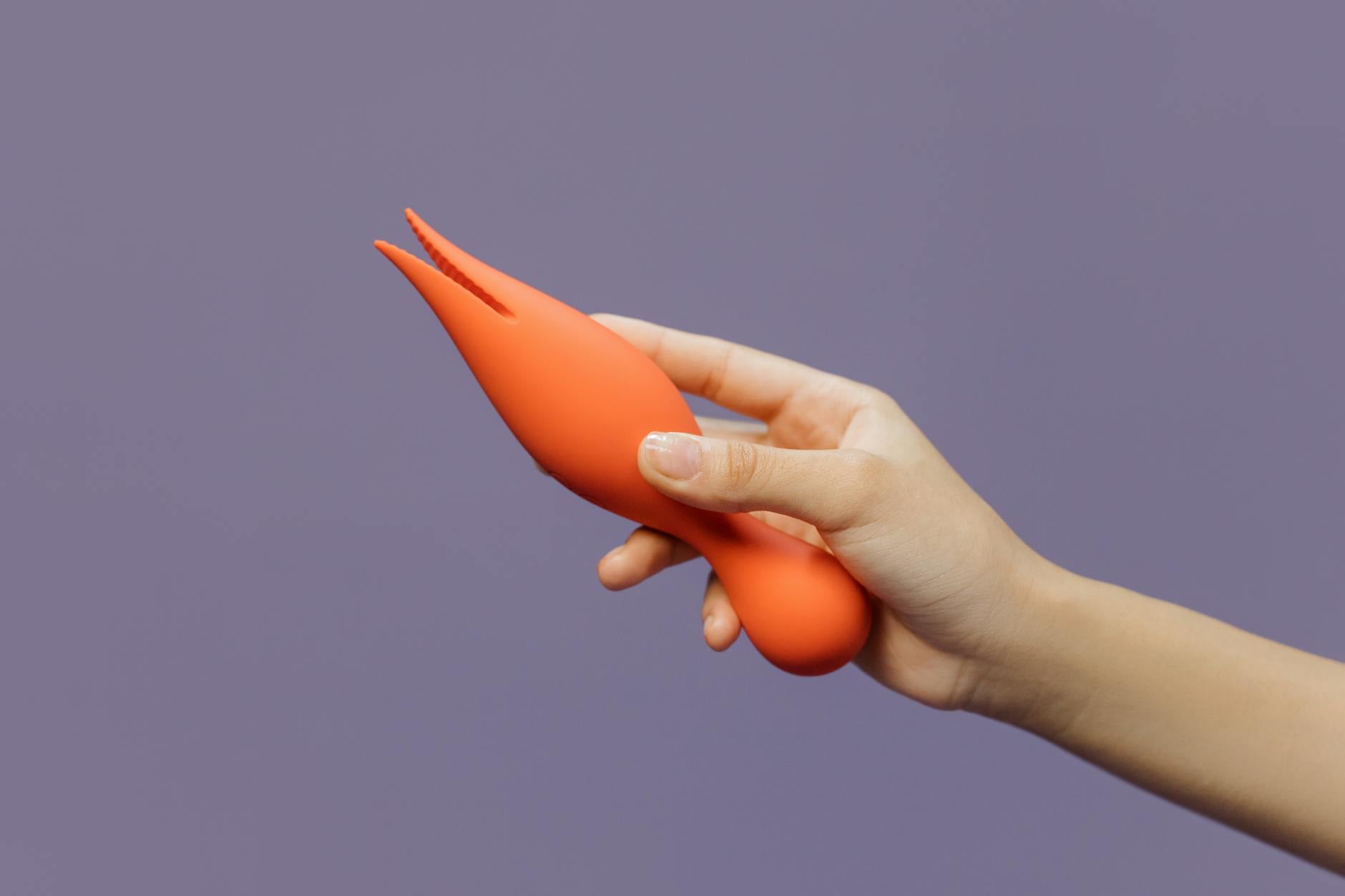
A lemon vibrator, particularly one with a suction or air-pulse mechanism like the Lem Vibrator, works differently than other toys during this sensitive reset phase. Instead of relying on direct pressure or friction, suction creates rhythmic stimulation that wakes up nerve endings without overwhelming them.
This matters when your sensation is returning because intense direct vibration can overstimulate a nervous system that's still finding its rhythm. You don't need the strongest setting. You need consistent, adjustable stimulation that you can control minute by minute as your body tells you what it needs.
The Lem Vibrator has multiple intensity levels for exactly this reason. You start low. You build slowly. And if the sensation feels off one day, you can drop back down without feeling like you're failing or broken.
Building back into sensation: a practical timeline
The first week after a medication change is about observation, not performance. Use your lemon clitoral vibrator on the lowest setting for no longer than 5 minutes. You're not trying to orgasm. You're reintroducing sensation.
Pay attention to where you feel it. Does the suction feel gentle or intrusive? Does it build in ways that feel safe? Can you stay present, or is your mind jumping to anxiety about whether you're "back to normal"? All of this is data. There's no wrong answer.
Week two, you can increase to 10-15 minutes if it feels right. You might start experimenting with mid-range intensity. This is also when you might notice that orgasms are possible again, but they feel different. Shorter. Longer. More diffuse. Concentrated in new places. Again, data.
By week three or four, most people have a clearer sense of their new baseline. You might feel fully back to your old pleasure patterns. Or you might find that your pleasure map has genuinely shifted. Both are completely normal.
What to expect from your first orgasm after medication changes
There's often pressure around this moment. Like it's a test of whether you're healed, whether the medication change was worth it, whether your body is still yours.
Honestly though. Your first orgasm after medication shifts is usually just awkward. It might be weaker than you remember. Stronger. Faster. Slower. It might make you cry, laugh, or feel completely disconnected from your body. These are all standard reactions, and they all pass.
Use your Lem Vibrator in a relaxed setting where you have at least 20 minutes and zero performance pressure. Not "I need to orgasm to feel better." More like "I'm exploring what's possible right now." Bring water. Bring lube. Bring patience. Your body is literally rewiring its relationship with pleasure.
The mental piece no one talks about
Here's what's actually harder than the physical recalibration. Letting yourself enjoy it. After months or years of numbness, pleasure can feel suspicious. Like your body is playing a trick. Or like you need to hurry up and experience all of it before it disappears again.
Both of those beliefs kill the moment. You can't rush your way back to pleasure. And you can't white-knuckle your way to a sensation you're afraid will vanish.
Instead. Approach this the way you'd approach reconnecting with someone after a long distance separation. You're not trying to pick up where you left off. You're getting to know each other again. The Lem Vibrator becomes a tool for that reintroduction, not a proof that you're fixed.
If you're in a partnership, let your partner know what's happening. Not to pressure them or recruit them into your healing. But so they understand if you're quieter during sex, or need more time, or want to explore solo for a while before bringing them back in. When your partner wants lemon vibrators and you're unsure, that's a conversation worth having separately from your medication adjustment.
If sensation isn't returning the way you expected
Most people see significant changes in sensation within 2-4 weeks of a medication change. If you're at week six and still feeling flatness, that's worth checking in about.
First. Talk to your prescriber. Sometimes the new medication also has sexual side effects, and switching again or adjusting your dose can help. Sometimes adding something like bupropion can counteract SSRI numbness. These are real medical solutions, not failures.
Second. Be patient with the psychological piece. If you spent months or years numb, your brain might have learned to protect itself from disappointment by staying shut down. Sensation returning is not just a physical recalibration. It's also an emotional one. That's actually the same work as reconnecting with yourself after grief.
Third. Explore different tools. Not every toy works for every body at every stage. Maybe the Lem feels right, or maybe you need something with different pressure, or different intensity options. That's fine. You're allowed to try multiple tools while you're recalibrating.
Making space for the pleasure that's returning
This is the part that actually matters most. Your medication changed. Your sensation changed. Neither of those things mean you need to earn back pleasure or prove that your body is working.
Your pleasure is yours. It belongs to you. It matters whether you're on medication or off it, numb or feeling everything, single or partnered, exactly as you are right now.
The Lem Vibrator, or any lemon clitoral vibrator you choose, is just a tool for meeting your body with curiosity instead of judgment. For exploring what's possible without demanding a specific outcome. For saying yes to sensation when it returns, without guilt or hesitation.
That's the real work. Not the orgasms. Not the intensity. Just showing up for yourself with patience, and whatever brings you pleasure right now.
Frequently asked questions about medication changes and pleasure
How long does it take for sensation to fully return after stopping an antidepressant?
Most people notice changes within 1-2 weeks, with more significant shifts by week 4. But "fully back to normal" is different for everyone. Your baseline might genuinely be different now, and that's okay. Some people experience heightened sensation at first, then it stabilizes. Others have a slower, steadier return. If you're past 8 weeks with no changes, check in with your prescriber.
Can I use a lemon vibrator while I'm still on a medication that dulls sensation?
Absolutely. The Lem Vibrator and other lemon clitoral vibrators can actually help you stay connected to sensation even when medication is flattening it. Some people find that suction-based stimulation works better than other types when they're medicated. You might not reach orgasm, but you can still explore and keep your body engaged. That continuity of practice actually helps sensation return faster when your medication changes.
What if my new sensation feels overwhelming after being numb for so long?
That's very common, especially if your numbness lasted years. Your nervous system might interpret strong sensation as threatening because it's been defended against it for so long. Solution: go slower than you think you need to. Use lower intensity settings. Take more breaks. Build your tolerance gradually. This isn't weakness. It's nervous system recalibration, and it responds to patience. Some people find that rebuilding intimacy after trauma requires this same slow approach.
Can I use lube with my lemon clitoral vibrator during medication transition?
Yes, always. Water-based lube is your friend here. It reduces friction, gives your returning sensation more room to breathe, and makes the experience feel more comfortable during a sensitive time. Many people find they need more lube during medication transitions because their natural lubrication production is also recalibrating. That's normal.
Is it okay to feel emotionally vulnerable during this pleasure return?
Completely normal. Pleasure and emotion are entangled in your nervous system. After months of numbness, sensation returning can unlock tears, laughter, grief, or joy that you've been holding. Your body might literally shake or quiver. That's your nervous system releasing tension it's been holding. If it happens, just breathe. You're safe. Let it move through.
Should I wait until sensation is fully back before using a lemon vibrator with my partner?
Not necessarily. Some couples find that exploring together during the transition helps the returning sensation feel less lonely. Others prefer to reconnect solo first, then bring their partner in. There's no right answer. What matters is communication. Tell your partner what you're noticing, what feels good, what feels uncertain. The Lem Vibrator can be part of that conversation, or you can explore solo for a while first. Both paths work.
Your sensation is returning because your nervous system is healing. That's not a small thing. It deserves attention, patience, and tools that meet you where you are. The lemon vibrators in your life are part of that reclamation, not the whole of it. You are.