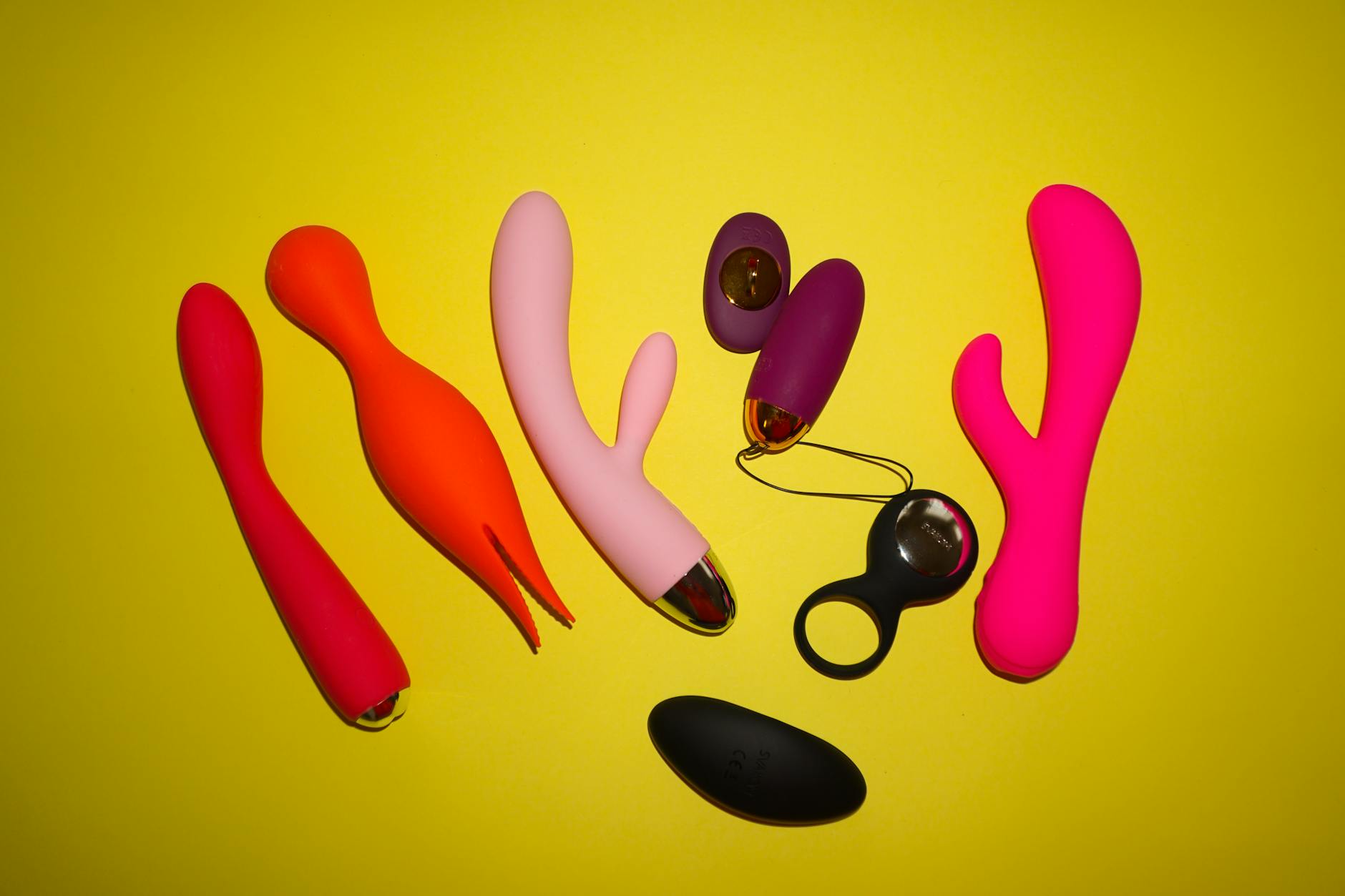
Here's the thing about toys and partnerships
Your partner mentioned lemon vibrators. Or left a tab open. Or casually brought it up, and now you're sitting with it, somewhere between "interesting" and "does this mean something about our sex life is broken."
It doesn't. But I know that feeling. It's a mix of curiosity, mild defensiveness, and wondering if you're supposed to want this already. Most people feel exactly this way the first time a partner brings toys into the conversation.
Why hesitation is actually information, not a problem
Hesitation is not "no." It's not even "I'm worried." It's often just "I need to understand this first." And that's workable. Actually, hesitation paired with a partner who's genuinely interested creates the best conditions for discovery because it means you'll move slowly enough to actually enjoy it.
There are real reasons hesitation shows up. You might worry that introducing toys means your partner isn't satisfied. You might feel like you're "supposed" to be enough on your own. You might not have grown up around conversations about pleasure tools, so they feel like admitting something went wrong. You might have experienced shame around sexuality, and toys land in that tender spot. Or you might simply not know what it would feel like, which is a legitimate unknown.
None of those reasons disqualify you from exploring this. They just mean we need to start with honest conversation, not with an Amazon order.
Start where you actually are, not where you think you should be
Before anything else, tell your partner what's actually true. "I'm interested but nervous" is a complete sentence. "I don't want to feel like I'm not enough for you" is honest information they need to hear. "I grew up in a house where this stuff wasn't talked about" explains a lot. "I'm curious but I want to move slowly" sets a boundary that actually protects the experience for both of you.
The magic move here is separating two conversations. One is about whether toys are something you want to try. The other is about whether your partner is satisfied with you. Conflating them turns both conversations into mush. Your partner bringing this up is not a referendum on your adequacy. It's an invitation to expand, together.
Ask your partner directly: "What made you think of this?" Don't ask it defensively. Ask it like you genuinely want to know. You might hear "I've always been curious," or "I read that clitoral vibrators feel different from hands and I want to try it with you," or "I loved how it felt when we tried it before and I want to go deeper." All of those answers tell you something useful. And none of them are "you're not good enough."
What a lemon vibrator actually does (and doesn't)
Here's the practical bit that often dissolves hesitation: a lemon vibrator isn't trying to replace anything. It's not a partner substitute. It's not commentary on your hands or mouth or body. It's a different sensation, like the difference between a kiss and a touch. Your hands do something lemon vibrators can't. A lem does something hands can't.
Lemon clitoral vibrators work through suction and gentle pulsing, which creates a sensation that's distinct from the direct stimulation you get from manual touch. Some people find it more intense, some find it more diffuse, some find it helps them orgasm faster or deeper or in a different way than they usually do. It's not better. It's different.
The other truth: you don't have to use it on yourself. Many people, especially when they're hesitant at first, find that having a partner use a lemon vibrator on them feels more comfortable than using one alone. It stays in the realm of shared experience. You're not managing it by yourself. You're discovering it together, which is honestly the whole point.
The first conversation, mapped out
Start with curiosity, not commitment. "I want to understand what appeals to you about this." You're gathering information, not making a decision.
Then move to honesty: "Here's what I'm feeling about it." Whether that's worried, curious, ambivalent, or some mix. Your partner needs to know the actual landscape you're working with.
Then negotiate: "I'm not ready to buy one today. But I'd be open to looking at options together, without pressure." You set the pace. Your partner goes at your pace, or you're not doing this together.
Then, if you both want to move forward, be specific about what matters to you. "I want to know how to use it safely," or "I want you to promise we can stop anytime," or "I want to make sure this doesn't become the only way we connect." These aren't deal breakers. They're the conditions that make this feel safe and good.
Moving from hesitant to curious (a few practical steps)
One: look at them together. Not with the vibe in your hand yet. Just look at pictures, read descriptions, understand the design. A lemon vibrator is straightforward and intuitive. Seeing how it actually works often dissolves fear. "Oh, it's not... I thought it would be..." is a common reaction.
Two: talk about sensation. Ask your partner what sensations feel best to them. Are they craving intensity? Steady pressure? Something their hands can't do? This conversation moves you out of abstract worry and into concrete desire.
Three: watch the video or read the care guide together. Seriously. Knowing how to clean it, how the settings work, what the material is, how long the battery lasts. These details are boring and also deeply reassuring. You're not dealing with a mystery object. You're dealing with a product with clear specs.
Four: agree on one tiny trial. Not a whole evening. Not "let's make this the centerpiece of our sex life." Maybe just five minutes. "We'll use it for a few minutes and then stop, and we'll talk about how it felt." Low stakes. High information.
What actually happens when you try it together
Most people find that the first time is less intense than they imagined. The sensation is specific. If your partner is using it on you, there's an intimacy to it because it requires attention and presence. They have to pay attention to how you're responding. You have to communicate.
You might find it feels amazing. You might find it feels just fine, not life-changing. You might find that you like it sometimes and not others. You might find that you love it solo but less when your partner is involved, or vice versa. All of these are normal outcomes.
Most importantly, you might find that trying something your partner was curious about deepens your connection. Not because the toy is magic. Because you navigated hesitation together and ended up somewhere new.
The conversation after the first time
This is where most couples mess up. You try it, and then neither of you says anything, and it lives in weird silence. Don't do that. Ask each other simple things: "What did you think?" "Did it feel the way you hoped?" "Do you want to try it again?" "Is there something we'd do differently?"
You don't have to be enthusiastic to be honest. "It was interesting but not really my thing" is useful information. "I loved it more than I expected" is useful information. "It felt good but I want to go slower" is useful information.
If you genuinely don't enjoy it and your partner does, you have options. You could use it on them while they use it on you. You could be present without being the one controlling it. You could agree that this is something they explore solo and you're there for the conversation afterwards. There's no rule that you both have to want identical things.
When hesitation turns into "actually, no"
Sometimes you move through the conversation, you try it, and you realize you genuinely don't want to do this. That's okay. You get to say that. What matters then is that your partner hears you. Not defensively, not trying to convince you otherwise, but actually hearing it.
If your partner is disappointed, that's their feeling to work through. It's not your job to manufacture enthusiasm you don't feel. But it's worth exploring whether the "no" is about the toy itself, or about something deeper like feeling controlled or unsafe in the relationship. Those are different conversations.
The broader thing this is actually about
When your partner brings lemon vibrators into the room, they're saying "I want to explore pleasure with you." They're saying "I'm curious and I want you to be part of that." That's actually pretty vulnerable. And your hesitation, if you move through it with honesty rather than rejection, is also an invitation. It's inviting them to go slow, to explain, to make sure you're comfortable. That's intimacy.
The couples I work with who navigate toy conversations well don't end up in the same place. Some embrace them wholeheartedly. Some use them occasionally. Some decide they're not their thing but now they know. What they all have in common is that they talked about it. They didn't let curiosity curdle into resentment or hesitation become rejection. They met each other in the middle.
Your hesitation isn't something to push through. It's information. Use it. Honor it. And then decide if you want to explore together.
FAQ: Hesitation and vibrators
Does using toys mean my partner isn't satisfied with me?
No. Toys aren't a commentary on you. They're a commentary on curiosity. People who love their partners deeply and feel satisfied still want to explore. It's not scarcity. It's abundance.
What if I try it and hate it?
Then you've learned something. You communicate that clearly, and you both move forward. Your partner gets to decide if they want to explore it solo, or if they're satisfied knowing you tried. You don't have to keep doing things you hate to keep your partner happy.
Is it normal to feel a little jealous or insecure about this?
Completely normal. You're not broken. You're human. The move is to tell your partner that jealousy exists, so they can help reassure you. "I feel a little weird about this" opens a conversation. Keeping it secret makes it bigger.
What if I want to try it but I'm scared it will hurt?
A lemon clitoral vibrator doesn't penetrate. It's external stimulation through suction and pulsing. It's gentler than a lot of manual touch. If you have pain concerns, start with lower intensity settings and go slowly. If pain shows up, stop. You control the experience.
Can we use a lemon vibrator without it becoming the only way we have sex?
Absolutely. You decide how often it appears. Once a month? Once a year? Sometimes in longer sessions, never for quickies? You and your partner get to set those boundaries. It's a tool in your toolbox, not the entire toolbox.
What do I do if I'm the one who wanted toys and my partner is hesitant?
Give them space to get curious at their own pace. Don't push. Don't buy one and leave it on the bed. Do have honest conversations about what hesitation is about. Then honor their pace. The best experiences happen when both people genuinely want to be there.