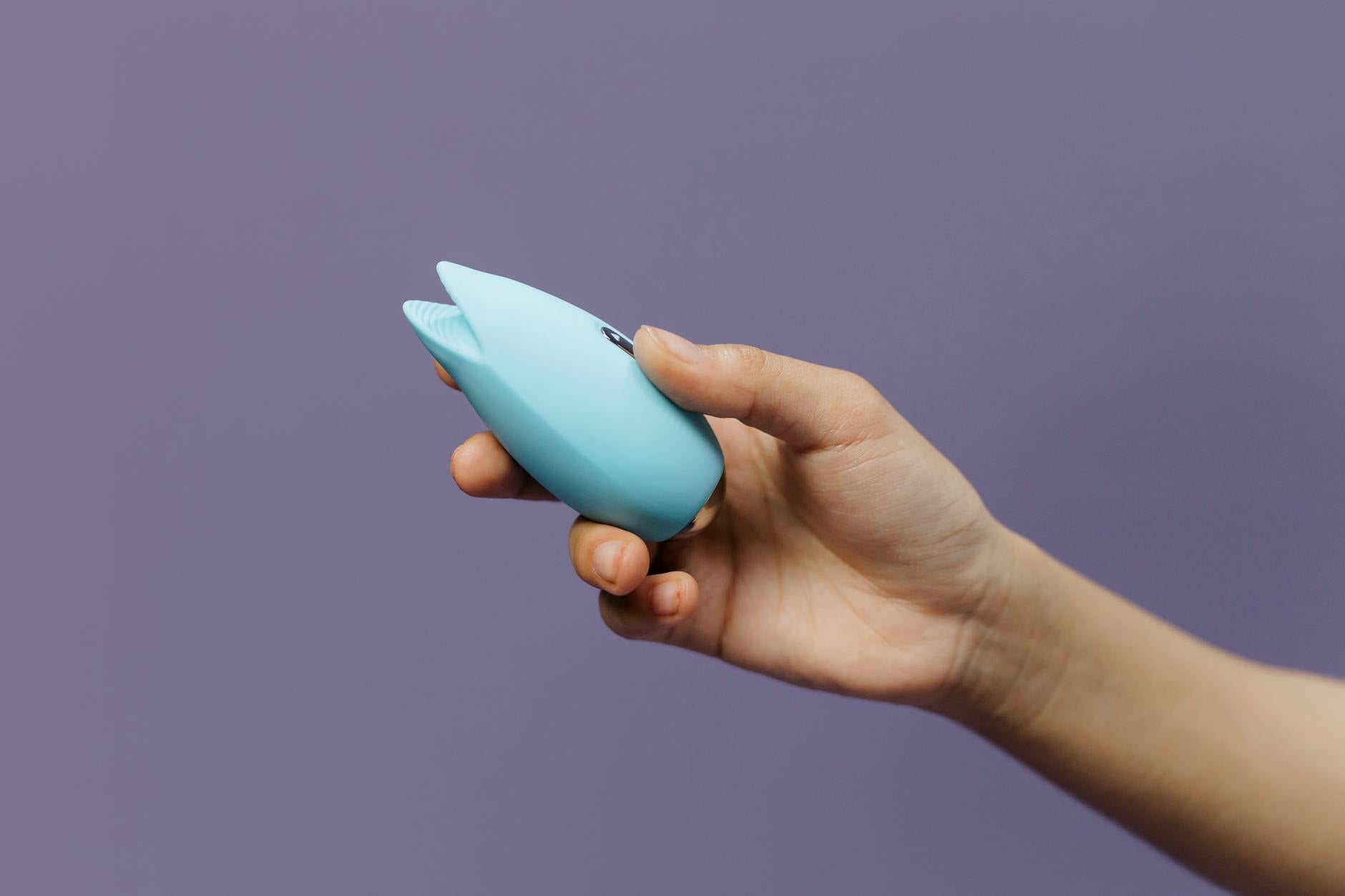
The body image pleasure gap is real
Let's start with something nobody tells you straight: your brain's opinion of your body directly shapes what you feel during sex and with a lemon vibrator. It's not romantic, it's not spiritual, it's just neuroscience. Negative self-talk during touch creates a split attention that kills arousal. You're half in your body, half narrating a criticism. That divided focus changes everything.
Most people assume the issue is physical. "My body changed, so my pleasure changed." Sometimes that's true. More often, it's the shame about the change that's doing the damage, not the change itself.
How body image hijacks the pleasure response
When you're worried about how you look, your nervous system stays in a low-level threat state. That means:
Your pelvic floor tenses even when you don't notice it. Tension blocks the kind of deep relaxation that allows strong sensations. A lemon clitoral vibrator demands that relaxation to work well. If you're bracing, even slightly, the suction mechanism doesn't create the full effect.
Your brain's reward circuitry gets competing signals. Part of you is experiencing pleasure, part of you is documenting insecurity. This is like trying to listen to music while someone's talking in your ear. The song doesn't stop, but you can't hear it properly.
Your sense of time collapses. When you're self-conscious, a five-minute session feels like an hour. Arousal takes longer because your nervous system is partly offline.
The physical symptoms that show up
Three things I hear constantly from clients working through body image stuff:
"It takes forever to feel anything." This is attention fragmentation. Your clitoris doesn't change. Your capacity to notice sensation does. A lemon vibrator works through suction and pulse, which are meant to build intensity gradually. But if you're bracing, that gradient flattens.
"I feel numb, even when I'm turned on." This is dissociation. Your body is responding, but your mind has checked out. It's a protective reflex. You're trying to enjoy something while simultaneously escaping from the experience. That contradiction creates numbness.
"Orgasms feel weaker or incomplete." Orgasm requires full system engagement. When part of your nervous system is locked down by shame, the whole response becomes shallow. You might still climax, but it feels like watching it happen rather than living through it.
None of these are permanent. They're all reversible once you interrupt the feedback loop.
Why a lemon vibrator can actually help break the pattern
Here's what I find works: external sensations that are precise enough to interrupt your internal monologue. A lemon clitoral vibrator does this in a specific way. The suction pattern is complex enough that it demands attention. You can't half-pay attention to it. Either you're feeling the pulse or you're not. There's no middle ground.
This creates what therapists call "somatic anchoring." Your mind settles into the sensation because the sensation is interesting and novel. You're not bored enough to slip back into criticism. You're not threatened enough to dissociate. You're just... present.
Second, using a device solo removes a major stressor for people with body image anxiety. You're not performing. You're not being observed. Your body is not being evaluated by another person. That safety creates permission to actually feel.
Third, the specificity of a lemon vibrator's design means you get faster positive feedback. When arousal and pleasure build quickly and clearly, your brain starts updating its predictions about your body. From "my body is broken" to "my body actually works, and that's interesting." That shift doesn't happen overnight, but it starts fast.
The mindset pivot that actually works
Here's what doesn't work: forcing positivity. "Love your body." "You're beautiful." "Stop being so hard on yourself." These are true and completely useless when you're in the middle of feeling ashamed.
What works is curiosity. Shift from evaluation to observation. Instead of "Does my body look good?" ask "What does my body actually feel right now?" That moves you from judgment into sensation. A lemon vibrator is perfect for this because it forces you to pay attention to feeling, not appearance.
Specific practice: use your lemon vibrator and focus only on the physical sensation of the suction. Not what the sensation means. Not whether it's happening fast enough. Just the sensation itself. When your mind drifts to criticism, notice it like you're noticing a sound in the distance. Then drift back to the feeling. This takes about four or five sessions to build as a habit.
Another reframe: separation of identity from body experience. Your body changes. Your body ages. Your body might carry stretch marks or scars or changes you didn't choose. That's not a problem with your body. That's just what bodies do. Meanwhile, your capacity for pleasure is entirely separate from those changes. A lemon vibrator demonstrates this concretely. The same device creates sensation whether your body matches an ideal or not. The pleasure is available either way.
When body image stuff intersects with other factors
If body image concerns started after a major change (weight shift, surgery, aging), how lemon vibrators improve pleasure after significant weight gain or loss covers the practical and emotional layers in detail.
If the concern is tied to grief or loss of identity, why lemon vibrators feel different when grieving or processing loss addresses that specific angle.
If this is tied to relationship dynamics and how your partner relates to your body, that's a conversation piece separate from solo pleasure work. The solo practice with a lemon vibrator actually builds the foundation for that conversation. When you've felt your own pleasure clearly, in your own body, that becomes the baseline. Then partnership becomes easier.
Building the practice
Start with no expectations. Use your lemon vibrator on a night when you have at least thirty minutes and no pressure to climax. The goal is sensation awareness, not outcome.
Begin with external sensations only. Spend five to ten minutes just feeling the suction against different areas of your vulva. Not trying to reach anything. Not tracking if it's working. Just feeling the texture of the experience.
When you're ready to intensify, do it incrementally. Lemon vibrators have different intensity levels for this reason. The gradual build helps you stay present instead of jumping ahead to evaluation.
Do this three to four times before expecting pleasure to feel dramatically different. Your nervous system learns through repetition. Trust the process even if the first session feels awkward.
Over time, you'll notice the chatter quiets. Not because you suddenly love your body, but because the sensations become more real than the criticism. Your brain's bandwidth fills up with what's actually happening instead of the story about what should be happening.
The relationship piece
If you share intimacy with a partner, this solo work is your foundation. You're learning what your body actually feels like when you're not performing. When you bring that back into partnership, you have something solid to offer. You know what works. You know what you feel. That confidence translates directly to how you show up.
Many couples find that when one partner rebuilds pleasure confidence through solo practice, the whole dynamic shifts. It's not about the device. It's about the permission you've given yourself to experience your body as functional and pleasurable, separate from how it looks.
When it's deeper than body image
If negative self-talk is tied to depression, trauma, or deeper shame, that work might need a therapist alongside the device. A lemon vibrator is a tool for pleasure, not a substitute for processing. But it can be part of the healing. When you have direct evidence that your body works and feels good, that evidence becomes harder for shame to argue with.
Body image concerns are so deeply wired into how we experience pleasure that most people think the feelings are facts. They're not. They're just thoughts your nervous system learned to have. And thoughts can be updated. A lemon vibrator can be the evidence that starts that update.
Frequently asked questions
How long does it take to feel pleasure again if body image has killed it?
You don't "feel pleasure again" because pleasure didn't go anywhere. What returns is your ability to be present for it. Most people notice a shift within three to five solo sessions. Full integration might take two to three months. That said, even one session where you experience uninterrupted sensation is proof of concept. Your body works. You just needed permission.
Can a lemon vibrator actually bypass body image anxiety, or is that wishful thinking?
It can't bypass it. What it does is create competing stimulation that's strong enough to interrupt the anxiety loop. You're not thinking about how you look when you're fully focused on a novel sensation. That's not denial. That's redirection. Over repetition, your brain updates its threat assessment because the evidence keeps showing that pleasure is possible.
Is it true that body image issues feel worse during certain times of the month or year?
Yes. Hormonal shifts can amplify negative self-talk. Seasonal changes affect mood and body perception. Stressful life events make you more likely to retreat into criticism. None of this means you're broken. It means your nervous system is responding to real environmental shifts. A lemon clitoral vibrator works better on days when your nervous system is more settled. That's why consistency matters more than intensity.
Should I try to "think positive" while using a vibrator to counter body image thoughts?
No. Forced positive thinking against real anxiety doesn't work. It just adds a second layer of pressure. Instead, let the sensation do the work. When criticism arises, notice it and return to the physical feeling. Your brain doesn't need you to argue with the thoughts. It needs you to be present for evidence that contradicts them.
Can using a device actually change how I relate to my body long-term?
Not on its own. But it's part of the change. When you have repeated, clear evidence that your body is responsive and capable of pleasure, that evidence accumulates. Over time, your brain's default story about your body shifts from "broken and undesirable" to "functional and worthy of care." That's not magic. That's neuroplasticity. Your brain updates its beliefs based on repeated evidence.
What if body image anxiety comes back after I start feeling better?
It probably will, in moments. You're rewiring decades of conditioning. That's not failure. That's normal. The difference is you now have a practice that interrupts the anxiety. When the thoughts return, you have something to do that demonstrates otherwise. Each time you use your lemon vibrator and feel pleasure clearly, you're updating your nervous system's expectations. Repetition is the work.
Moving forward
Body image and pleasure are connected, but they're not the same thing. Your body's capacity for sensation is entirely separate from whether it matches an image in your head. A lemon vibrator makes that distinction concrete. When you feel clear, unmistakable pleasure in your own body, regardless of how that body looks, something shifts. Not because you suddenly love yourself in some big spiritual way. Because the evidence keeps mounting that pleasure is available to you. And eventually, your nervous system believes the evidence.
If you want support working through this with a partner or on your own, contact us. Pleasure matters. Your body matters. And they're not separate things.