
The numbness that comes with time
After ten, fifteen, twenty years together, touch stops being novel. You know exactly where your partner's hand will go. They know your body's script by heart. And somewhere in that predictability, sensation itself fades into the background. This isn't a failing. It's just what happens when you optimize for comfort over exploration.
But here's the thing: sensation doesn't disappear because you've been together too long. It disappears because your nervous system has learned to filter it out. Your brain got efficient. And efficiency kills arousal.
That's where lemon vibrators come in. Not as a replacement for your partner. As a way to rewrite the script together.
Why sensation dulls in long-term relationships
There are three overlapping reasons sensation fades when you've been with someone for years.
The habituation problem. Your nervous system literally stops registering touch it's seen before. A partner's hand on your thigh used to send a signal to your brain that said "attention required." Now it says "already mapped, ignore." This is neurologically real, not emotional. It's your system doing its job too well.
The distraction layer. After years together, sex gets folded into the everyday. You're thinking about tomorrow's schedule, whether the kids are asleep, if you paid that bill. Your attention is split three ways. Arousal needs focus. Without it, sensation becomes wallpaper.
The performance expectation. You both know how this works. You've done it a hundred times. The script becomes so automatic that novelty disappears entirely. And your body responds to novelty. Strip that away, and pleasure becomes maintenance rather than experience.
Lemon clitoral vibrators interrupt all three of these loops at once.
How suction changes what sensation feels like
Most vibrators you've used deliver stimulus through vibration. You know what that feels like. A lemon vibrator works differently. It uses pulsing suction. This is crucial because suction stimulates nerve clusters your partner's hand alone can't reach the same way.
When you introduce a lemon sucker into touch with your partner, three things happen immediately.
First, the sensation is novel. Your nervous system actually pays attention because it hasn't seen this pattern before. That attention is what makes pleasure feel like pleasure again.
Second, suction spreads the stimulus across a wider area of nerve tissue. Fingers are precise. Suction is diffuse. This forces your brain to process sensation differently, which breaks the habituation script.
Third, it creates a natural pause in the predictable rhythm both of you have fallen into. Rhythm is comfort, and comfort kills arousal. A change in pace, intensity, or stimulus type forces you both back into presence.
Starting the conversation before you introduce anything
Here's where most couples mess this up. They introduce a toy without talking about what's actually happening. And the partner who hasn't touched their own pleasure in years suddenly feels like they're being replaced.
Before a lemon vibrator enters the bedroom, frame it differently in conversation.
Don't say: "I want to try this because what we're doing isn't working."
Do say: "I miss how alive my body feels when we're being adventurous together. I found something that might help us both remember that."
This is not splitting hairs. The first version blames the relationship. The second version identifies the problem as external. And when you frame it as external, it becomes a problem you solve together instead of one person's failure.
If your partner is hesitant about how to use lemon vibrators when your partner wants them but you're unsure, listen to the actual concern underneath the "no." Usually it's one of three things: they feel inadequate, they don't understand it, or they're worried about losing their role in your pleasure. Address the real concern, not the surface objection.
The first time you use it together
Don't start with penetrative sex or even the final destination. Start with touch.
One of you lies down. The other begins with hands only. Normal touch. After a few minutes, introduce the lemon vibrator at its lowest setting on the outer edges of the vulva. This isn't about intensity. It's about adding information.
Let your partner hold it if you're comfortable. Shared control changes the dynamic from "my partner is doing something to me" to "we're exploring this together."
Talk during this. Small things. "That feels different." "More toward the left." "Slow down." This isn't clinical feedback. It's presence. And presence is what long-term couples lose first.
If you're worried about sensation feeling good enough, remember: the goal right now isn't the strongest orgasm you've ever had. The goal is to feel something you haven't felt in a while. The bar is lower than you think.
Building from sensation back into connection
After a few sessions with the lemon vibrator alone, fold it into partnered touch. Your partner uses hands and fingers while you use the lemon on yourself. This creates a hybrid rhythm that's new to both of you.
Then gradually shift so your partner is occasionally holding the vibrator while exploring your body with their other hand. This keeps their attention on you, but with a tool that allows them new ways of touch.
The key is slowness. Long-term couples often rush sex because they've optimized for efficiency. But efficiency is exactly what killed sensation in the first place. Slow down deliberately. Let attention rebuild.
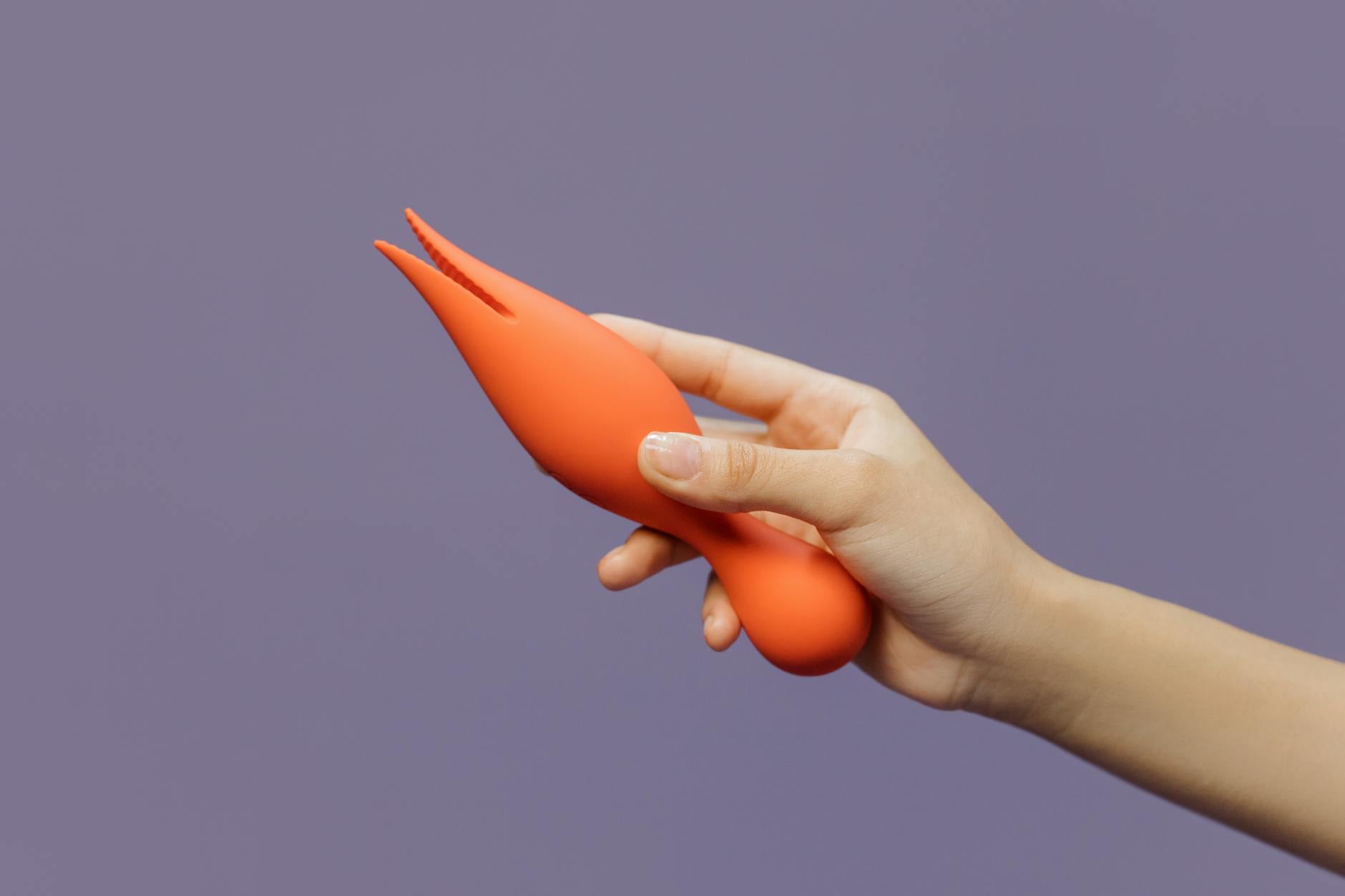
Photo by cottonbro studio on Pexels
When sensation still feels muted
If you've been using a lemon clitoral vibrator together for a few weeks and pleasure still feels distant, the problem might not be physical. Long-term couples accumulate emotional distance alongside physical numbness. Sometimes you need to address both.
If resentment lives in the relationship, pleasure will too. Your nervous system doesn't separate "I'm mad at you" from "I can't feel touch." They're the same signal coming from different places.
This is where couples work might matter more than any toy. A therapist who specializes in sexual intimacy can help you separate the emotional tangles from the sensory ones. A lemon vibrator is a tool. It works best when trust is already mostly there.
If you're dealing with genuine numbness from medication, stress, or hormonal changes, that's different. A vibrator can still help, but it might be useful alongside conversations with a healthcare provider about what's actually dampening sensation.
The unexpected benefits of using this together
Most couples who introduce a lemon vibrator expecting better orgasms end up getting something different instead: permission to be curious again.
Curiosity is the opposite of efficiency. When you're curious, you ask questions. When you ask questions, you listen. When you listen, attention comes back. And attention is the foundation of sensation.
You might find that your partner wants to explore their own pleasure with the lemon vibrator separately. That's actually healthy. It means they're rebuilding their relationship with their own body. Then you can integrate that back into partnered pleasure later.
You might discover positions that work better with the vibrator that now become favorites without it. You might find that after rekindling sensation together, some of your original rhythm comes back but different. Better, actually, because you chose it instead of defaulting to it.
When to seek support
If pain appears during any of this, stop and see a healthcare provider. Pain is information, and it's usually fixable.
If emotional distance feels too wide to bridge with touch alone, couples therapy helps. The vibrator is a tool, not a therapist.
If one of you is genuinely disinterested in reconnecting through pleasure, that's important information too. It might mean you need to talk about what's really going on beneath the surface.
But if you're both willing to slow down and relearn each other's bodies with fresh attention, a lemon vibrator is genuinely one of the most effective ways to do it. It's not magic. It's just neurologically honest. Novelty rebuilds sensation. Attention rebuilds connection. Together, they rebuild pleasure.
People also ask
Can a lemon vibrator improve sensation if my partner and I feel emotionally disconnected?
A toy can create the conditions for reconnection, but it can't manufacture emotional intimacy that isn't there. If resentment or unresolved conflict is thick between you, a vibrator might actually feel awkward instead of helpful. Start with conversations first. The vibrator works best when trust is already mostly intact, even if passion has faded.
How do I know if my partner is actually comfortable with using a lemon vibrator?
Watch for what they do, not just what they say. If they're present and curious, asking questions and exploring with you, they're comfortable. If they seem withdrawn, doing it for you rather than with you, or going through the motions, that's a signal to pause and talk about what's underneath the hesitation.
Should I use the lemon vibrator alone before trying it with my partner?
It helps. When you know what the sensation feels like on your body, you can explain it better to your partner. You also lose any performance anxiety about what the experience "should" be like. Solo exploration gives you language and confidence for partnered exploration.
Is it normal for sensation to still feel distant after using a lemon vibrator a few times?
Completely normal. You're trying to reverse years of habituation in a few sessions. Give it time. Typically four to six weeks of regular exploration before you notice real shifts in sensation. If after eight weeks nothing has changed, talk to a healthcare provider about whether medication, stress, or hormonal shifts might be involved.
What if my partner wants to use the lemon vibrator on me but I'm worried they'll feel replaced?
That fear makes sense, and it's worth talking about directly. A vibrator doesn't replace a partner. It complements them. Your partner's hands, presence, and attention are irreplaceable. The vibrator is just one more tool in your toolkit together. In fact, many couples find that the vibrator gives their partner new ways to touch them, which often makes connection feel stronger, not weaker.
Can lemon vibrators help if we've been together so long that we don't really have sex anymore?
Yes, but think of it as one step in a longer conversation, not the solution by itself. If sex has completely disappeared, that's usually a sign that something else is wrong. A lemon vibrator might gently interrupt that pattern and remind you both what sensation feels like. But it's paired best with curiosity, honesty about what's been missing, and willingness to rebuild together.
The point
Long-term relationships are built on knowing each other. But sometimes that knowledge becomes so automatic that you stop actually knowing each other at all. A lemon clitoral vibrator is just an object. What matters is what it makes possible: the chance to be curious, surprised, and present with someone you've been with for years. That's where sensation comes back from. Not from the toy. From the attention you're both willing to bring back to each other.
If you're ready to explore reconnection more deeply, reach out to us. We're here to answer questions or help you figure out what might work for your specific situation.