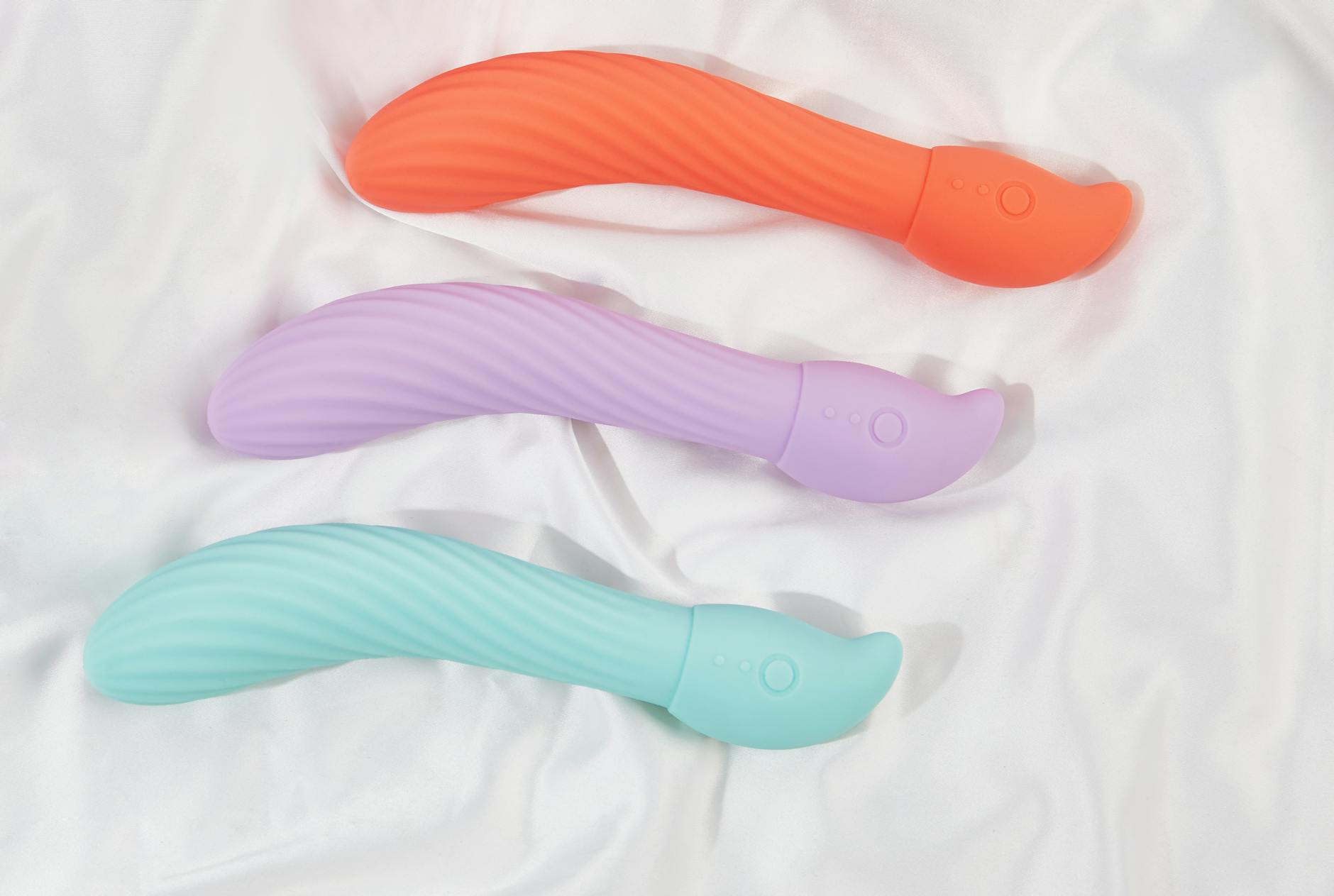
The wrong vibrator isn't broken, your body just isn't compatible with it
You've heard the hype around lemon vibrators. You buy one. You try it and feel... almost nothing. Or it's overwhelming. Or it hits a weird angle that doesn't work. So you think you're broken, the toy is broken, or you're just "not a vibrator person."
None of those are true. What's actually happening is that your body, anatomy, and sensitivity profile don't match that particular toy. Just like one person's ideal running shoe is another person's blister waiting to happen, one person's perfect clitoral vibrator can be completely wrong for someone else.
Why body type and sensitivity actually matter
Here's the thing that most vibrator guides gloss over: clitoral tissue varies wildly from person to person. Some people have prominent external anatomy that sits forward. Others have more internal structure with less external protrusion. Your clitoral glans might be more or less sensitive than someone else's. Your pelvic floor might be tight or relaxed. You might be taking medications that affect sensation. You might have recently given birth, recovered from surgery, or be navigating perimenopause.
All of these factors change what kind of lemon vibrator or clitoral vibrator works for you. And that's not a flaw in the toy. It's just biomechanics.
The anatomy question you need to ask first
Before you buy a lemon vibrator, here's the honest assessment you need to do. It takes about 30 seconds and no one else needs to know.
Stand in front of a mirror or use a hand mirror. Look at your external anatomy. Do you have a clear, visible clitoral glans that sits apart from your body, or is it more tucked or hidden under your clitoral hood? Neither is better. But it changes what you need from a toy.
If you have prominent external anatomy, you can use almost any vibrator, including direct-contact devices. If your anatomy is more internal or tucked, suction toys like lemon adult toys tend to work better because they don't require you to position the toy at a specific angle. They work with your body instead of requiring your body to work for the toy.
This is why the Lem is so popular. It's a lemon clitoral vibrator that uses suction and pulsation instead of pure vibration. That means it works well for a wider range of anatomy. You don't have to find the "perfect spot." The suction creates that contact for you.
Sensitivity ranges and what they mean for pattern selection
Sensitivity isn't a binary. It's a spectrum, and where you sit on that spectrum changes which lemon sucker is right for you.
Low sensitivity. You need a lot of stimulation to feel pleasure. You might rarely or never orgasm from clitoral stimulation alone. Standard vibration might feel like a faint buzz. You need intensity. This is where you want a toy with strong, consistent patterns, multiple intensity levels, and ideally suction that creates constant pressure (not just vibration). A device with 8-10 distinct patterns gives you variety to explore.
Moderate sensitivity. You can orgasm with clitoral stimulation, but it takes some time and the right kind of touch. You can feel the difference between intensity levels. You want a toy that's customizable but not overwhelming. Here, a mid-range clitoral vibrator with 3-5 good patterns and a range from gentle to moderately intense is your sweet spot. The Lem works beautifully at this sensitivity level because its lowest settings are genuinely soft, and you can build up from there.
High sensitivity. You feel everything intensely. Direct contact or high patterns might feel overwhelming or even uncomfortable. You might experience sensitivity pain after extended use. You need a toy that lets you start very, very low. This might mean starting at pattern 1 and staying there, or using a toy through clothing, or adding a layer of silicone. The worst thing you can do is buy a toy with only one or two intensity levels where the lowest setting is still too much.
Variable sensitivity. Your sensitivity changes throughout your cycle, with stress, with age, with medications, with how aroused you are. You need a toy that has a genuinely wide range from gentle to intense. This gives you flexibility to use the same toy at different sensitivity levels depending on the day.
Size, shape, and what actually fits your life
Beyond anatomy and sensitivity, you need a toy that you'll actually use. Which means thinking about practical things.
Overall size. Smaller toys are easier to travel with, easier to hide, easier to use discreetly with a partner in the room. Larger toys give you more surface area to work with and more ergonomic handle space. Neither is wrong. But if you're someone who travels for work or lives with roommates, a compact clitoral vibrator is more realistic than something you need to hide in a locked box.
Handle design. If you have arthritis, large hands, or limited grip strength, a thin handle is a nightmare. You want something substantial. If you have small hands or limited mobility, a large chunky toy might be uncomfortable to hold. Think about how you'd actually grip this thing for 10 to 20 minutes.
Waterproofing. If you like masturbating in the shower or bath, waterproofing is non-negotiable. If you use toys on your bed or couch, you can live without it. But know what you're getting before you buy.
Noise level. Some clitoral vibrators are silent. Some sound like a small appliance. If you share walls, live with family, or value privacy, a quiet toy matters. Suction-based toys like lemon vibrators tend to be quieter than traditional vibrators because they don't have the same mechanical buzz.
The materials question and skin sensitivity
Your lemon sexual toys should be body-safe silicone, glass, or stainless steel. That's not because other materials don't exist. It's because your vulva and vagina have a delicate pH balance and a rich microbial ecosystem. You don't want to mess with that.
If you have sensitive skin or a history of infections, you might be sensitive to certain additives in silicone. Some silicones are poured (generally safer), others are molded (sometimes cheaper but with more filler). Premium silicone costs more for a reason: it has fewer additives that can irritate your tissues.
If you're using the toy with a partner, make sure your lubricant is compatible. Water-based lube works with all silicone toys. Silicone-based lube will degrade silicone toys over time. Check before you buy if you're already committed to a particular lubricant.
Temperature and texture as unexpected factors
Here's something people don't talk about: how a toy feels before you turn it on matters.
Silicone toys warm up quickly to body temperature. Glass and stainless steel stay cool longer. Some people love the initial coolness of glass. Others find it jarring and prefer silicone warmth. This is a real preference that changes the experience.
Texture matters too. Smooth silicone feels completely different from textured or ribbed silicone. Some people love texture because it creates varied stimulation. Others find it distracting or uncomfortable. If you've never used a toy before, smooth is typically the safer starting point. You can always explore textured lemon adult toys later.
How to actually test before you commit
Honestly, the best way to know if a vibrator is right for you is to use it. But since you can't exactly test drive a clitoral vibrator at a store, here's what you can do instead.
Read reviews from people with your body type, sensitivity level, and goals. Not generic reviews. Specific ones. "I have a low clitoris and high sensitivity and this overwhelmed me" tells you more than "great product" ever will. Look for patterns in reviews. If dozens of people with your profile say the same thing, that's data.
Buy from a retailer with a good return policy. Hello Nancy offers a 30-day money-back guarantee. That's not just customer service. That's permission to experiment. If you buy a lemon vibrator and it's not right for you, you can return it and try something else. The only way to find your toy is through trial. Remove the shame from that process.
Talk to your partner or a trusted friend about their experience if you're both willing to share. This isn't about copying someone else's choice. It's about gathering data. "Oh, you also have trouble with direct contact? Yeah, I can't use that toy either" tells you something useful.
When to start very low and work up
This applies especially if you're someone just starting out with toys, recovering from surgery, or navigating a body change. Start at the lowest intensity. Spend time there. Let your body adjust. Add lubricant generously. Give yourself time to warm up.
When you use a clitoral vibrator when you're just starting out with toys, the mistake most people make is jumping to pattern 3 or 4 on the first day. Your body hasn't calibrated to this sensation yet. Pattern 1 might feel like nothing for 30 seconds, then suddenly feel intense as your nervous system wakes up. Trust that process.
Different lemon vibrators for different needs
Hello Nancy makes several lemon vibrators because different people need different things. The Lem is the original lemon clitoral vibrator, built on suction technology that works for a wide range of body types and sensitivities. If you're new to toys or unsure what you need, it's a solid starting point.
If you want something smaller or quieter, there are other options in the Hello Nancy range. If you prefer a more traditional vibration pattern to suction, that's a valid preference too. The goal isn't to own the "right" toy. It's to own a toy that works for you.
What changes and what doesn't over time
Your sensitivity might change. Your body will absolutely change. You might heal from something that required a gentler toy. You might take a new medication that affects sensation. You might move into a different life stage where your needs shift.
The toy that's perfect for you now might not be perfect in five years. That's normal. Some people end up with a small rotation of toys for different occasions and sensations. Others stick with one workhorse toy their whole life. Both are fine.
What matters is checking in with yourself regularly. Every couple of years, ask: is this still working for me? If it is, great. If it's not, it's not a failure. It's information. Time to explore something different.
FAQ: Common questions about choosing the right toy for your body
Can I use a regular vibrator if I have a retracted clitoris?
Yes, but you might find a suction toy easier. A retracted or internally-positioned clitoris means you have to find the exact angle for a traditional vibrator to feel good. Suction toys like lemon vibrators create stimulation without requiring precise positioning. That said, plenty of people with internal anatomy love traditional vibrators. It's about trial and preference, not rules.
What if I'm really sensitive and everything feels too intense?
Start with the lowest intensity setting and use it through clothing or over your underwear. Sound weird? It works. The fabric dampens the sensation and lets your body acclimate. Alternatively, look for toys specifically designed for sensitive users, or try a lower-powered device. And always use generous lubricant. A well-lubricated toy glides instead of buzzes, which often feels less intense.
Do I need a toy sized for my external anatomy?
Not necessarily. Size is more about ergonomics and storage than fit. A larger toy doesn't "require" larger anatomy. What matters is the contact point. If the toy's head can create contact with your clitoris, the rest is about comfort and sensation preference.
I'm taking antidepressants and can't feel much. Should I try a stronger vibrator?
Maybe, but not automatically. Some antidepressants do reduce genital sensation as a side effect. If that's you, a more intense toy might help. But it could also just be overstimulating. Talk to your doctor first about whether the medication itself is the issue, then experiment with intensity. See why lemon vibrators feel different when you're taking antidepressants for more context.
Is one pattern or rhythm better than another, or is it completely personal?
Completely personal. Some people orgasm instantly from one specific pattern and can't come from any other. Others use a pattern just to warm up, then switch to something else. Some people like constant rhythm. Others love variation. There's no "best." There's only what works for your body and your nervous system.
What if I buy a vibrator and I hate it?
Return it. That's what the 30-day guarantee is for. And then try something different. This isn't about landing on the perfect toy on the first try. It's about gathering data about your body. Each toy you try teaches you something, even if the lesson is "okay, not this one."
Finding your match takes honesty, not perfection
Choosing the right lemon vibrator comes down to one thing: knowing your body well enough to describe what it needs. That means asking yourself hard questions about your anatomy, your sensitivity, your lifestyle, and your preferences. And then trusting that there's a toy out there designed for exactly that profile.
You're not broken if the first toy doesn't work. You're not "not a vibrator person" if one particular toy feels wrong. You're just not matched yet. The match exists. It just takes honest assessment and a willingness to experiment.
If you want to talk through what might work for your body or your situation, get in touch. Hello Nancy is here to help you find exactly what works for you.