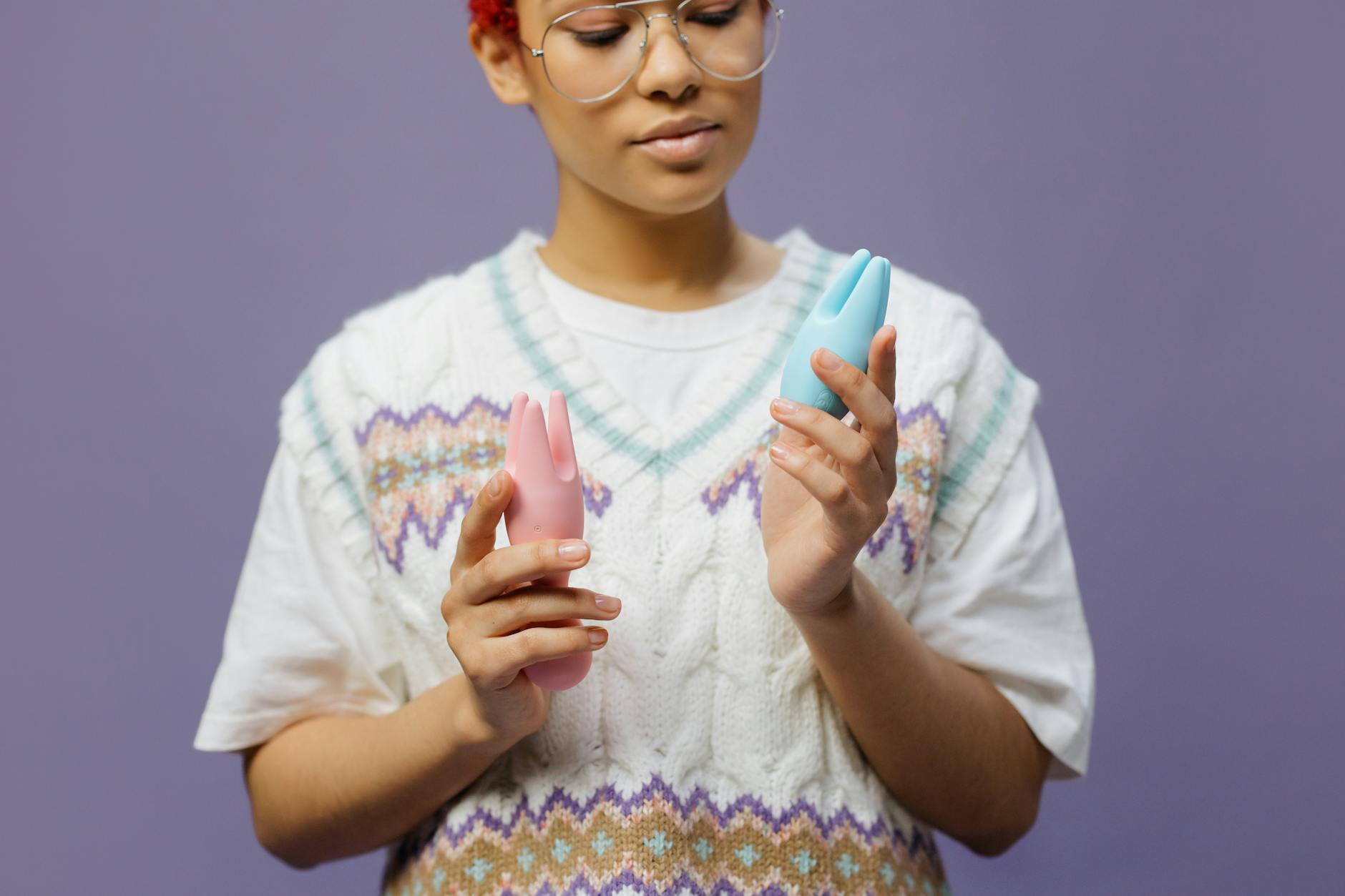
Let's name the thing nobody wants to say
Mismatched desire is the elephant in the bedroom. One partner wants sex twice a week. The other is happy with twice a month. Neither is wrong. Both are frustrated. And somewhere in that gap, one person starts feeling rejected and the other starts feeling pressured, which makes everything worse.
Here's what lemon vibrators actually do in this situation: they don't fix the mismatch. But they can transform what the mismatch means.
Why desire differences feel like rejection
When partners have different libidos, the higher-desire person often interprets low desire as "my partner doesn't want me." The lower-desire person feels like sex has become an obligation rather than something they choose. Both narratives create distance.
The gap isn't really about frequency. It's about meaning. Sex means connection to one person and performance pressure to another. Until you separate those, tools won't help. Once you do, they're incredibly useful.
In my practice, I've worked with hundreds of couples where one partner wanted sex significantly more often than the other. The couples who actually improved weren't the ones who compromised on frequency. They were the ones who redesigned what sex could look like.
How lemon vibrators shift the dynamic
A lemon clitoral vibrator introduces something new: solo pleasure that doesn't require synchronized desire.
Think about it. The higher-desire partner can use a vibrator on their own or with their partner present, without needing the lower-desire partner to want penetrative sex or even full arousal. The lower-desire partner can focus on connection and intimacy without feeling obligated to reach the same level of arousal.
This isn't a workaround to avoid intimacy. It's a reframe. Instead of "you want sex and I don't," it becomes "you want to feel pleasure right now and I want to be here with you."
Many couples find that watching or being near a partner using a lemon vibrator actually increases desire in the lower-libido partner. Not because they suddenly want the same amount of sex, but because they're not anxious anymore. Anxiety kills desire. Pressure kills it faster.
The conversation starter framework
Introducing toys into a relationship with desire mismatch requires care, or it lands as "are you saying I'm not enough?" Here's how to frame it:
Start with the truth: "I notice we want different things sexually right now. I don't want to push you or make you feel obligated. And I also don't want to shut down my needs. Can we explore what that could look like?"
Then, make it about option expansion, not replacement. "I've been thinking about lemon vibrators. Not instead of us being together, but maybe alongside it. So I'm getting what I need and you're not feeling pressured."
The key is not weaponizing the tool. Don't introduce it as "see, I can solve my own problem so stop complaining." That guarantees a fight. Introduce it as "I want to stay connected to you AND honor what you actually want right now."
What changes when you use lemon vibrators together
Several things happen, in order.
First, the higher-desire partner stops white-knuckling through sex trying to extract enthusiasm from their partner. They can actually relax and enjoy sensation instead of monitoring whether their partner is having a good time. That shift alone makes sex better for both people.
Second, the lower-desire partner often experiences their partner's pleasure differently. When there's no performance pressure on them, they can actually be present. Presence is hot. Obligation is not.
Third, frequency often increases naturally. Not because anyone compromised on their needs, but because the whole experience stopped being fraught. One client told me, "We went from fighting about sex every week to him using the lemon vibrator and me actually wanting to help because I wasn't exhausted by guilt." That's the shift.
The physical setup that actually works
Let me be practical here. If you're navigating desire mismatch, the lemon clitoral vibrator works best when you think about positioning, timing, and privacy expectations.
Start with solo use. The higher-desire partner uses the vibrator alone, in a space where they feel comfortable. This gives you both a baseline. "I love this on pattern three." "It takes me about twelve minutes." These details matter.
Then, try being in the same room. Not having sex together yet, just coexisting while one person experiences pleasure. This sounds weird, but it's genuinely intimate. The lower-desire partner can read, touch their partner, be present without performing.
Eventually, many couples find the vibrator part of foreplay. Not as a replacement for partner touch, but as an addition. The lower-desire partner touches while the vibrator handles clitoral stimulation. Everyone gets something they want.
When this doesn't work (and what to do instead)
If you've tried lemon vibrators and desire is still completely mismatched, the issue isn't the tool. It's something else.
Low desire can stem from depression, medication, relationship resentment, hormonal shifts, or genuine incompatibility on libido. If the vibrator doesn't open things up after a few weeks, that's actually useful data. It means you need a different conversation.
Some couples benefit from talking to a sex therapist or relationship counselor separately from their partner first. There's often a backstory. "I don't want sex because I feel unseen in our relationship" can't be solved by a vibrator. It requires actual repair work.
The conversation you actually need to have
Here's what I tell couples: desire mismatch is solvable when both people stop treating it as a personal failure. The higher-desire partner isn't broken for wanting more. The lower-desire partner isn't broken for wanting less. You're just different.
Lemon vibrators help because they remove the pressure cooker. But the real work is agreeing on what sex actually means to each of you. Is it physical relief? Emotional connection? Stress reduction? Validation? Often, partners have completely different answers, and they're fighting about frequency when they actually need to be talking about function.
Once you know that, tools like a lemon clitoral vibrator make sense. Until then, any tool is just a Band-Aid.
FAQ: Desire mismatch and intimacy tools
Will using a lemon vibrator make my partner think I'm not attracted to them?
Not if you frame it right. The difference is intention. "I want to add pleasure to our life" reads completely differently than "I'm giving up on us." Have the conversation first. Say something like, "I want to stay connected to your body and my desire, and I think this could help." If your partner still feels hurt, that's information about what you actually need to discuss.
How long should we wait before introducing a vibrator if we have desire mismatch?
There's no timeline. Some couples benefit from talking to a therapist first to separate the desire mismatch from other relationship issues. Others jump in immediately and it opens things up. The key is mutual willingness. If one partner feels ambushed, wait. If both are curious, no need to delay.
Can using a lemon vibrator together rebuild desire if my partner has completely lost interest in sex?
No tool rebuilds desire on its own. But it can help you stay physically connected while you address what killed desire in the first place. That might be medication, depression, relationship resentment, or hormonal shifts. A vibrator keeps things from getting worse while you figure out the root cause.
What if my partner says introducing a vibrator means I'm rejecting them?
That's a sign the real issue isn't the vibrator. It's that they're already feeling insecure or rejected. This is actually a moment to stop and have the harder conversation. "I'm not rejecting you. But I notice you heard it that way. What's underneath that?" Often there's something about feeling unwanted, which a tool can't fix. Only honesty and repair can.
Is it weird if my partner watches me use a lemon vibrator but doesn't participate?
Not even slightly. Some people are aroused by their partner's pleasure. Some people need distance to process desire differences. Both are fine. The point is connection without obligation. If being near each other while one person experiences pleasure feels good, that's the win.
How do we navigate if one of us wants to use the vibrator during partnered sex and the other feels like it's replacing them?
That's about conversation design. Before you try it, talk about what you each need. "I want the vibrator because my body responds differently than it used to" is different than "I want this because you're not enough." Be specific. And start outside the bedroom. Practice saying these things when you're not vulnerable.
What actually changes
I won't tell you that a lemon clitoral vibrator solves desire mismatch. It doesn't. What it does is create a container where both partners can stop negotiating and start exploring.
For the higher-desire partner, it means their need for pleasure isn't a rejection of their partner. For the lower-desire partner, it means they're not responsible for someone else's satisfaction.
That space is where real change happens. Not because a tool fixed anything, but because the pressure finally released.
If you're stuck in desire mismatch and not sure where to start, that conversation might be the first step. If you're curious about tools like lemon vibrators, that's worth exploring together. But the real work is always the conversation.
Ready to talk? Let's work through this together.