Let's talk about the thing you're actually nervous about
It's not the toy. It's the conversation. Introducing a lemon vibrator or any clitoral vibrator into partnered sex feels risky because it's loaded with invisible subtext. You're worried he'll feel inadequate. Or she'll feel like you're rejecting her. Or they'll think you're pushing for something weird. And honestly? That fear is valid. But it's also solvable.
I've worked with hundreds of couples navigating this moment. The ones who do it smoothly aren't the ones with perfect communication already. They're the ones who treat the vibrator introduction as what it actually is: a conversation about pleasure, not a referendum on the relationship.
Why the timing of this conversation matters
Here's what I see go wrong most often: someone brings up the vibrator mid-conflict, or late at night when emotions are already high, or casually during an argument about something else entirely. The toy becomes a weapon instead of a tool.
The best time to introduce this idea is when you're both relaxed, fed, and not trying to have sex right then. Sunday morning coffee. A walk. Literally any moment that's neutral ground. You want space to breathe, not performance pressure hanging over the conversation.
Pick a moment when you can say something like: "I've been thinking about trying something new in bed, and I wanted to talk about it first." That opener does three things at once. It gives them a heads-up, it shows respect, and it frames this as collaborative, not unilateral.
The exact conversation to have
Start with your own pleasure, not the toy.
Instead of "I want to use a vibrator," try: "I've noticed that I take a while to come, especially during partnered sex. I've been researching ways to help that, and I found something that could actually make this better for both of us." You're translating "I want this toy" into "I want better sex with you."
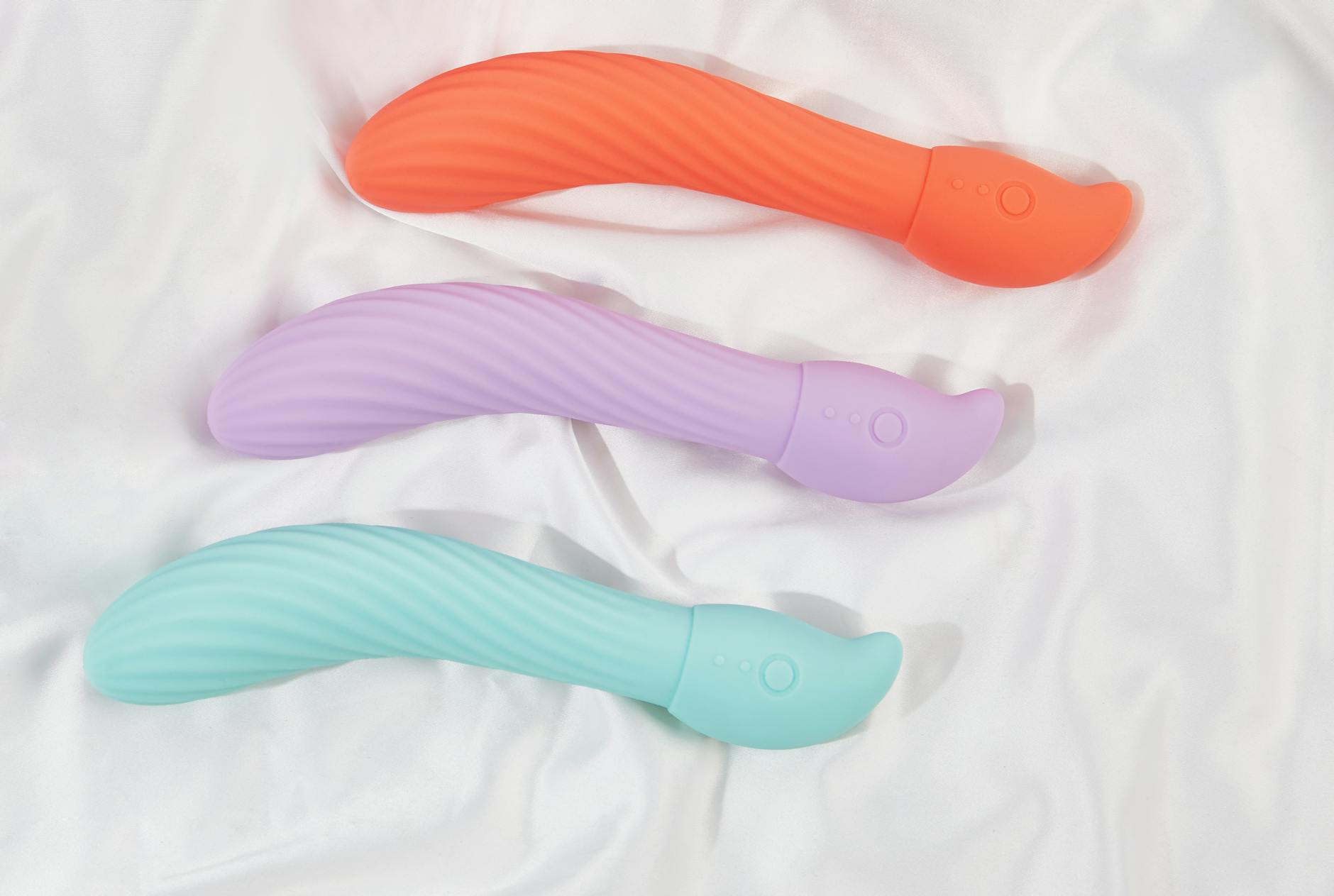
Then show them what it is. Actually show them. Bring out a lemon vibrator, let them hold it, talk about how it works. Demystifying it kills half the anxiety right there. It's not a replacement. It's a tool. Like a vibrating massager, except designed for clitoral pleasure.
Then ask an actual question: "How do you feel about trying this together?" and then stop talking. Let them answer. Don't fill the silence with reassurance or justifications. They might need time to process. That's fine. That's actually healthy.

Photo by Madison Inouye on Pexels
What to do if they react badly
Reactions usually land in one of three buckets: defensive, confused, or reluctant.
Defensive sounds like "So I'm not enough for you?" or "You want that instead of me?" If that happens, you stay calm and you reframe. "No. This is about adding to what we have, not replacing anything. You're the person I want to explore this with."
Confused is easier. They literally just don't understand. Answer questions. Show them reviews. Explain that this is about clitoral stimulation, which is different from penetration, and they can still be involved in every second of it. Clarity fixes confusion fast.
Reluctant is the trickiest. They hear you, they don't hate the idea, but they're not exactly enthusiastic. In this case, you might say: "You don't have to decide right now. I'm going to use this by myself first, and if you want to join me later, that's totally open." That takes the pressure off them and also gives you space to explore on your own.
How to actually use it together the first time
Don't make it a production. This isn't a performance. You're not trying to convince them that it's hot. You're just... using it.
Start with your clothes on, if that feels safer. Let them see how it feels, hear it, understand that this isn't replacing anything they do. You can still kiss them, still touch them, still have that connection. The vibrator is just an addition to the mix.
If you're having penetrative sex, you can use a clitoral vibrator like the Lem before, during, or after. Some people use it to warm up. Others use it during, with a partner inside and the vibrator running on the external tissue. Others come with it first, then transition into partnered sex. There's no script here. You figure out what works.
The first time is not the time to get complicated. You're learning each other's rhythms with this new element. That takes a few rounds. Be patient.
What happens if they want to use it on you
Some partners immediately want to take the wheel. They feel like they're helping, contributing, taking part in your pleasure. If that works for you, great. If it doesn't, say so. "Actually, I like the control here," is a totally fair boundary.
Others get curious about sensation. They might ask to feel it on their own body, or they might want to explore how it feels on different parts of you. This is actually healthy. You're both learning. Curiosity is good.
The conversation between sessions
After you've used it together once, talk about what you liked and what you didn't. Not in an interrogation way. Just casual feedback. "I liked when you..." or "That felt really good when..." or "Next time, I want to try..."
This is where you learn if your partner enjoyed it, or if they just tolerated it to make you happy. If they're genuinely into it, they'll say so. If they're faking it, they'll be vague. If you get vagueness, loop back: "Real talk. Did you enjoy that, or were you just being supportive?" Most people will tell you the truth when you ask directly.
Why this matters beyond just the vibrator
Introducing a clitoral vibrator with a partner isn't really about the toy. It's about whether you can ask for what you want and listen to what they want without shame or defensiveness getting in the way.
If you can navigate this conversation, you can navigate bigger ones. Desire mismatches. Boundary shifts. What happens to sex when life gets complicated. The couples I work with who can talk about a vibrator without drama are the couples who stay connected through everything else too.
When to bring in backup
If the conversation goes sideways, or if your partner consistently shuts down any discussion about your pleasure, that's not a vibrator problem. That's a relationship problem. Consider couples therapy. A good therapist can help both of you understand what's really underneath the resistance. Sometimes it's insecurity. Sometimes it's different relationship values. Sometimes it's communication patterns that have been stuck for years.
A lemon vibrator is a tool. It's not a fix. But it can be a doorway into conversations that actually matter.
FAQ
Will using a vibrator with my partner make them feel less needed?
Not if you frame it correctly. A vibrator adds sensation and speed that hands or bodies can't replicate. It's not a replacement for touch or intimacy. Many couples find that using a clitoral vibrator together actually deepens connection because you're focusing on mutual pleasure instead of performance. The key is including your partner in the experience, not using it as a solo activity that excludes them.
Is it normal to need a vibrator to orgasm during partnered sex?
Completely normal. Clitoral stimulation during penetration isn't always straightforward from anatomy alone. Studies suggest that 70% of people with vulvas need direct clitoral stimulation to reach orgasm. Using a lemon vibrator or any external stimulator isn't a sign that something's wrong with you or your relationship. It's just how bodies work. Plenty of couples use vibrators as part of their routine, the same way they might use lubricant.
What if my partner wants to use the vibrator but I'm not interested?
You don't have to participate in everything your partner enjoys sexually. You can absolutely say "I'm happy to watch" or "I'm going to do my own thing while you explore that." Sexual autonomy matters. You can support your partner's pleasure without being directly involved in every element of it. That's actually mature and healthy.
How do I know which lemon vibrator is best to introduce first?
Start with something straightforward and not intimidating. The Lem is popular because it's elegant, not overwhelming, and the suction mechanism feels different from a standard vibrator (which can actually feel less intense, not more). That said, you might also explore how to choose a vibrator based on your body type. The size, shape, and intensity all matter, and what works for your body might be different from what works for someone else.
Can I use a lemon vibrator if I have sensitive tissue?
Yes, but you need to know what sensitive tissue actually means for you. If you mean easily irritated or prone to pain, then certain vibrators work better than others. Lemon clitoral vibrators using suction technology tend to feel gentler than direct vibration on thinner or more reactive tissue. Water-based lubricant helps too. If you haven't explored this yet, our guide on sensitive tissue and vibrators might give you more specific answers.
What if we're already struggling with sex in our relationship?
Introducing a vibrator won't fix a broken sex life. If you and your partner are disconnected, rarely have sex, or have conflicting desires, a toy is a band-aid, not a solution. Consider talking to a couples therapist first. Once you've worked through the underlying dynamics, introducing new tools makes sense. But if the foundation is cracked, adding a vibrator to the mix usually just creates more tension.
The long game
Honestly, the couples who navigate this smoothly aren't the ones with the best sex lives already. They're the ones who can ask for what they want without shame and listen without defensiveness. That skill set applies everywhere. Your pleasure matters. Your partner's autonomy matters. Both things true at once.
Start the conversation. Keep it grounded. Be patient. And remember that this isn't about the vibrator. It's about building a relationship where both people feel safe asking for what they need.