The avoidance trap
Let's be real. You want to talk about sex. Your partner goes quiet. Maybe they change the subject. Maybe they make a joke. Maybe they agree in the moment and then nothing changes. The conversation dies before it starts, and you're left wondering if the problem is actually there or if you're making it weird.
Here's what I see in my practice: when one partner avoids talking about pleasure, the other partner often stops trying. You stop initiating conversation, stop reaching out physically, stop believing anything will change. But avoidance is not the same as disinterest. And silence is not the same as consent to stay silent.
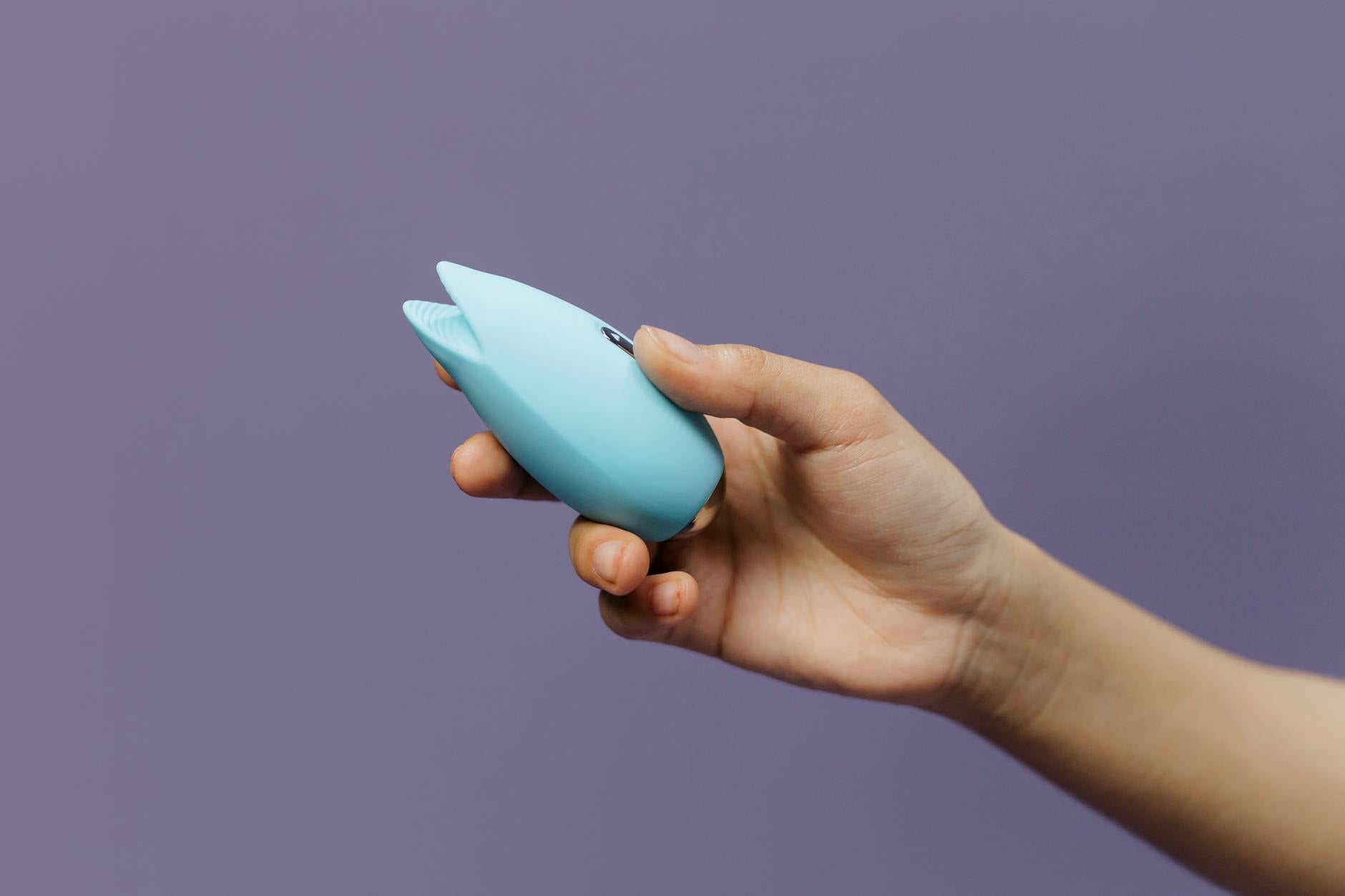
A lemon vibrator is not a solution to communication problems. But it can be a beginning. When your partner won't talk, your own pleasure becomes both an act of self-respect and a quiet invitation to change.
Why partners avoid the conversation
Three patterns I see repeatedly.
First: shame. Many people grew up in environments where sex was shameful, secret, or tied to performance anxiety. Talking about it directly triggers that old conditioning. They'd rather avoid the conversation than risk feeling exposed or judged.
Second: fear of inadequacy. Your partner might worry that if you introduce a lemon vibrator, you're saying they're not enough. They hear "I need this" as "you're failing." The conversation feels like a report card on their sexual performance, so they shut it down.
Third: conflict avoidance. Some partners have learned that talking about difficult topics leads to arguments. Sex talk feels risky. It's easier to pretend everything is fine than to risk a blowup.
None of these are your responsibility to fix. But understanding them changes how you approach the avoidance.
Start with solo pleasure, not conversation
Here's the counterintuitive part: stop trying to have the conversation first.
Instead, give yourself permission to explore pleasure on your own. Use a lemon clitoral vibrator without framing it as a "we" problem or a "this is what's missing" statement. You're not waiting for your partner to make pleasure possible. You're claiming it yourself.
This serves two purposes. First, it reconnects you with your own arousal, your own body, your own sense of what feels good. When your partner has been avoiding the conversation, you've probably been suppressing your own desire alongside their avoidance. Solo exploration with a lemon vibrator is the antidote.
Second, it changes the dynamic. When you stop waiting for permission and start taking action, the power structure shifts. You're no longer the person asking for something your partner won't provide. You're the person meeting your own needs.
Start with a simple lemon clitoral vibrator like the Lem. Spend time understanding your own pleasure without an audience, without performance pressure. This is not a rebellion or a punishment. It's a reset.
Timing matters more than content
Once you've spent a few weeks rebuilding your own relationship with pleasure, the conversation becomes different. You're not coming from a place of deprivation. You're coming from a place of clarity.
But timing still matters. Do not have this conversation during sex, during an argument, or when either of you is tired or stressed. The worst place to talk about avoidance is in the moment of avoidance.
Instead, pick a neutral time. Weekend morning coffee. A walk. Somewhere you can both sit comfortably without performance pressure. Start small.
"I've been thinking about us, and I realize I've been waiting for you to make pleasure happen instead of exploring it myself. I got a vibrator. I've been using it, and I want you to know that about me. Not because anything's wrong with you, but because my pleasure matters to me." That's it. Not a demand. Not an accusation. Just information.
Some partners will open up after hearing that. Others will need time. Some will stay closed off. But you've done the part that was in your control.
What to do if they still won't engage
If your partner hears this and still shuts down, you have a choice to make that's bigger than vibrators.
Prolonged avoidance on something this fundamental signals a deeper issue. It might be shame, but it might also be that your partner is not willing to meet you emotionally. That's not a vibrator problem. That's a relationship problem.
At this point, couples therapy is not a nice-to-have. It's a practical necessity. A therapist can help your partner understand why they're avoiding, can create a safe space for both of you to talk about pleasure without judgment, and can help you figure out whether this is something you can move through together or a sign of incompatibility.
I say this not to be dramatic. I say it because I've watched people spend years trying to convince their partners to engage, and it rarely works. Change happens when someone is ready. Sometimes you can help create the conditions for readiness. Sometimes you can't.
Using lemon vibrators to rebuild intimacy together
If your partner starts to open up, move slowly. Don't assume they want to use a vibrator during sex immediately. That can still feel threatening.
Instead, introduce it as part of foreplay or as a way to explore sensation together. Let them watch you use a lemon clitoral vibrator without any pressure to participate. Sometimes just witnessing your pleasure, seeing how it affects you, dissolves the threat they were imagining.
Many partners who start out resistant become curious once they see it's not a replacement. It's an expansion. Your pleasure is more intense, which often makes them more interested in how they fit into that.
If they do want to be involved, use it as a communication tool. "I like this pattern slower." "Can you touch me here while I use it?" These small adjustments become a conversation your bodies are having that didn't exist before.
A lemon sucker style vibrator is particularly good for this because it's less intimidating than a larger toy. It feels like an upgrade from fingers, not an alternative to a partner.
The long view
One important note: using a lemon vibrator is not a magic fix for avoidance. It's a door opener. It gives you something concrete to reference when you talk about pleasure, and it reconnects you with your own desire in a way that makes the conversation more real.
But the real work is the conversation itself. The willingness to be vulnerable. The patience with a partner who might be scared. The clarity about what you actually need and what you're willing to accept.
If your partner continues to avoid after you've given them a chance to engage, you need to decide what that means for your relationship. Some people are willing to work through shame and fear. Some are not. Both are choices, but they lead to very different futures.
Your pleasure is not selfish. Wanting your partner to care about your pleasure is not asking too much. A lemon vibrator is just a tool. But using it is an act of self-respect, and that might be exactly what shifts something in your relationship.
People also ask
How do I bring up vibrators with a partner who never wants to talk about sex?
Start without framing it as a relationship issue. "I've been exploring my own pleasure more, and I got a vibrator. I wanted to be honest with you about it" is very different from "We need to talk about our sex life." The first is informational. The second sounds like a problem is being diagnosed.
Will using a lemon vibrator make my partner feel inadequate?
Possibly, but that's their issue to work through, not yours to manage. You can help by being clear that the vibrator is additive, not subtractive. But if your partner is so insecure that your pleasure threatens them, that's a conversation you need to have with them. Some people need therapy to move past that fear.
Can lemon vibrators actually help a relationship where communication has broken down?
No. But they can help you reclaim your own pleasure while you figure out whether the relationship is worth fixing. A vibrator gives you stability and self-respect, which makes you less desperate for your partner to change. Paradoxically, that desperation is often what keeps relationships stuck. Less desperation sometimes opens the door.
What if my partner wants to use the lemon vibrator together but I'm not ready?
You get to set that pace too. You don't owe immediate comfort with a new dynamic just because they've decided to engage. Use it solo first. Build confidence. Let them understand how it feels to you. Then decide whether bringing them in feels right.
Is it normal for partners to avoid sex talk?
Very normal. But normal is not the same as healthy. Avoidance usually stems from shame, fear, or past trauma. It's common enough that you're not crazy for noticing it. But it's also something that usually requires support to move through. Couples therapy is not a sign of failure. It's a sign of taking the issue seriously.
How long should I wait for my partner to be ready to talk?
That depends on your timeline and your energy. Some people need weeks. Some need months. But if it's been a year and nothing has shifted, you're not being patient anymore. You're being avoidant too, just in a different direction. At that point, you need to decide whether you're staying or leaving.
Next steps
Your pleasure is real. Your need for connection is real. Your desire to be seen and wanted is real. If your partner won't meet you there, that's information. A lemon vibrator won't change their mind. But it will change how you feel about yourself, and sometimes that's the shift that makes everything else possible.
If you're navigating this alone and need more support, reach out at /contact. Real connection doesn't have to stay stuck.