
Let's talk about the thing no one mentions
You're three months in. Things are good. Really good, actually. And somewhere between the first kiss and now, you realized something: you want to introduce your lemon vibrator. Not because something's missing, but because something matters to you. And that feels terrifying to bring up.
Here's the reality nobody tells you. The fear of asking is almost always bigger than the actual conversation. What you're actually scared of isn't judgment about the vibrator. It's the thought that bringing it up will somehow change how your partner sees you or, worse, make them feel inadequate. That fear is valid. And it's also completely addressable once you know how.
Why this conversation matters more now than you think
Research on couples and sexual aids shows something counterintuitive. Partners who can talk about pleasure devices early build better sexual communication patterns overall. Not because vibrators are magic. Because naming what you want, and doing it without shame, creates a foundation for every sexual conversation that comes after.
That's not small. That's the difference between a relationship where you both guess at what works and one where you actually ask.
The second thing worth knowing. Most new partners aren't threatened by vibrators. They're confused about them. They don't know what a lemon clitoral vibrator is supposed to replace or enhance. They don't know if you want it during partnered sex or solo. They don't know if bringing it up means something is wrong. Confusion looks like defensiveness, so you interpret it as rejection. But it's usually just uncertainty masquerading as hesitation.
The setup that actually works
Don't ambush this conversation during sex. Don't slip it in during a text chain about weekend plans. Do it in a calm moment, ideally when you're both clothed and not stressed, maybe over coffee or after dinner. The environment tells your partner this is normal, this is intentional, and this isn't an emergency.
Start with context about you, not about them.
"Hey, I want to talk about something that matters to me. I've used lemon vibrators before, and they're important to my pleasure. I really like being with you, and I'm hoping this is something we could explore together."
Notice what's in there. You. Your history. Your body. Your pleasure. Not "you're not enough" or "I need this because something's wrong." Just truth.
Then pause. Let them sit with it for a breath.
What your partner is probably thinking (and what to say)
Three most common reactions, translated from nervous silence.
"I thought sex with me was fine." Translation: Am I failing you? Response: "You're not. This isn't about you. It's about me knowing what feels good to my body. Kind of like how you might want to be touched a certain way. It's not about preference. It's just information."
"I don't know anything about vibrators." Translation: I'm worried I'll use it wrong or that you'll think I'm weird. Response: "I can show you. There's nothing complicated about it. And honestly? We'd be figuring it out together." Offer to show them the device if they're curious. Let them hold it, ask questions. Demystify it.
"Isn't that something you do alone?" Translation: I thought this was a solo thing. Response: "It can be. But I like the idea of using it when we're together too. Some people use lemon clitoral vibrators during partnered sex because it feels amazing. Some people use them before or after. There's no one way."
Your job in these conversations is to normalize the device by treating it normally yourself. You're not defending it. You're explaining it the way you'd explain that you like your coffee a certain way or that you prefer a particular kind of touch.
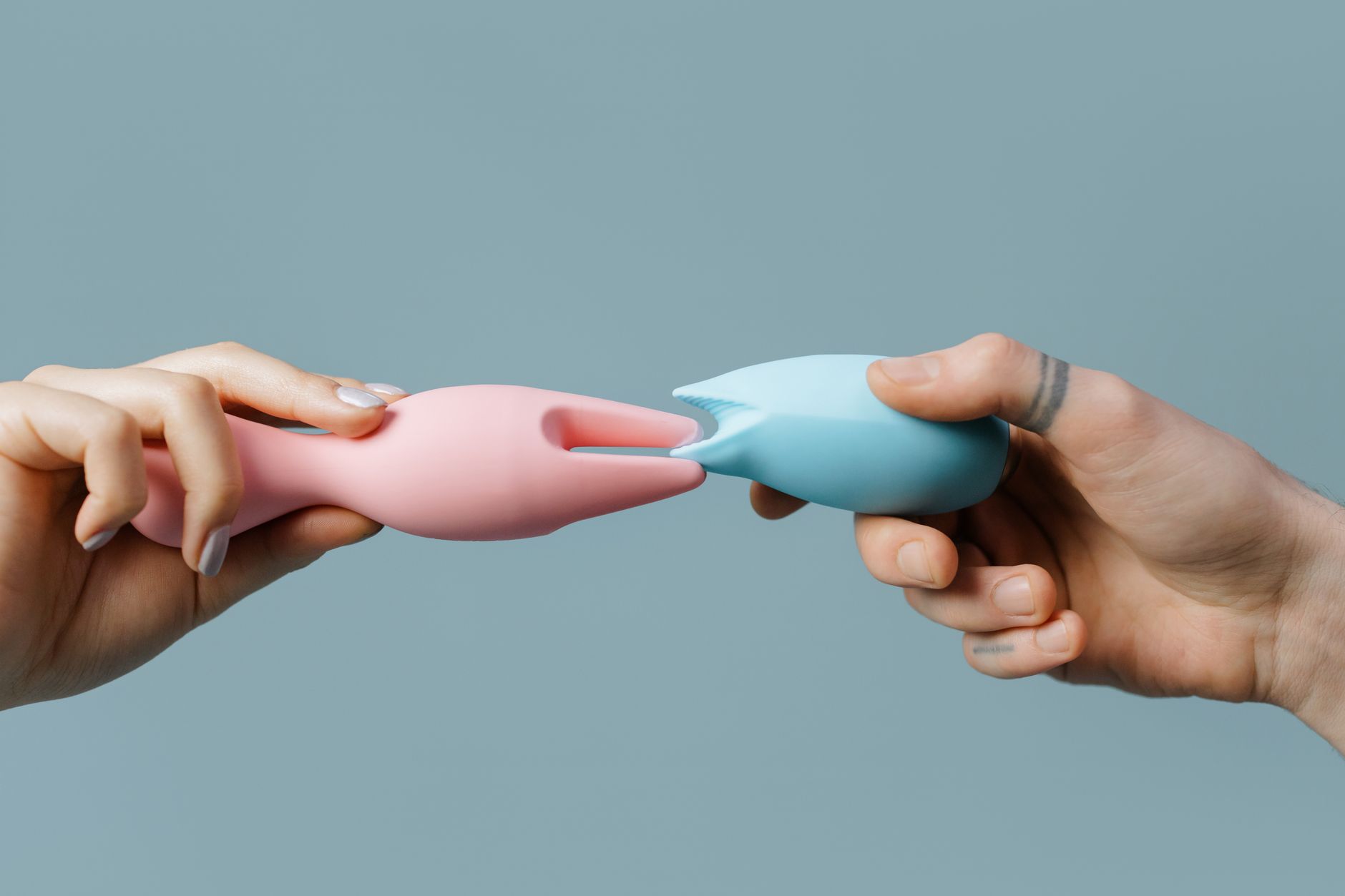
Photo by cottonbro studio on Pexels
How to actually introduce it the first time
Don't make it a performance. Don't say "okay, now we're going to use my vibrator." Just integrate it naturally.
If you're already being intimate, and it feels right, you might say something like "I want to show you something. I've got my vibrator here. Want to see how it feels?" That's direct without being clinical.
If your partner is using their hands or mouth on you, you can introduce it then. "This would feel even better with my lemon vibrator." Then grab it. Use it. Let your body show them what happens. Pleasure is the most honest language you have.
If you're nervous, start solo with your partner present. Not as performance, but as permission. "I'm going to use it for a minute. You can watch or we can just be together." Some partners find it incredibly hot to see what makes you feel good. Some find it informative. Either way, you're showing them that this is normal and that your pleasure matters.
The longer conversation that comes after
Once you've had the first experience, the conversation gets easier. But it also goes deeper. That's when you can ask what it felt like for them. Did they feel included? Did it turn them on? Did they want to participate differently next time?
Some partners love using a lemon vibrator on you. Some feel more connected watching you use it. Some want to be inside you while you're using it. Some prefer it stays a solo thing that happens separately. There's no correct answer. The correct answer is whatever you both agree to.
This is also when you might find out that your partner has always wanted to talk about pleasure but didn't know how. That this conversation opened a door for them. Which is the actual gift of being able to name what you want. It gives your partner permission to do the same.
What to do if they're actually resistant
Sometimes someone genuinely isn't on board. "I don't want to see that" or "I don't feel comfortable with it."
That's information. Not rejection of you, but a boundary. Respect it the way you'd want your boundaries respected. You're not obligated to give up your pleasure, but you are obligated to honor their comfort while you're together.
What that might look like practically: you use your lemon vibrator solo, before or after sex, not during partnered time. Or you use it when they're not around. Or you revisit this conversation in six months, when you're both more secure. People's boundaries about this stuff shift as they get more comfortable.
If someone is shaming you for owning clitoral vibrators or for wanting to use them, that's different. That's a value mismatch, not a temporary discomfort. Worth thinking about what that means for the relationship overall.
The part nobody talks about
Introducing your lemon vibrator to a new partner is partly about logistics and communication. But it's also about identity. You're saying, "This is part of how I experience pleasure. This matters to me." That's vulnerability. That requires trust. And it often marks a shift in the relationship because you're no longer protecting your sexuality from your partner. You're inviting them into it.
Some relationships deepen because of that. Some people realize they're not as compatible as they thought. Either way, you get information. And you get to keep your pleasure intact, which is non-negotiable.
Common questions answered
When should I tell them about my vibrator, before or after we first have sex?
Either works, but sooner is usually less awkward. If you bring it up before, you're setting expectations and giving them time to process. If you introduce it during or right after sex, it's integrated into the experience itself. The timing matters less than the tone. Whatever moment feels calmest and most intentional is the right one.
What if my new partner asks where I got my lemon vibrator or how much it cost?
Just answer directly. Lem Vibrator makes high-quality clitoral vibrators designed with care and precision. If they're curious about the product, that's actually a good sign. They're trying to understand something important to you. You can tell them about the design, the sensation, why you like it. Treating it like any other product you care about normalizes the whole thing.
Can I use my existing vibrator with a new partner, or should I get a new one?
Totally personal. Some people feel more comfortable having a device that feels "theirs as a couple." Some people prefer to keep their solo devices solo and introduce something new together. There's no hygiene issue either way if you're cleaning properly. Do whatever feels right to you both.
What if they want to use the vibrator on me but I'm not sure if I want that?
Say so. "I love that you want to. Can we try it and I'll tell you if I want something different?" Or "Let me use it first and show you what I like." Or "Not yet, but maybe later." Consent goes both directions. You get to set boundaries around your body and your device, even with a partner you trust.
Does using a lemon vibrator mean I'm not satisfied with partnered sex?
No. Using a clitoral vibrator during or between partnered sex just means you know your body and you're willing to pursue what feels good. Plenty of people find that vibrators and partnered touch work better together, not instead of each other. Your body isn't a either-or situation.
How do I know if my partner is actually okay with it or just going along with it?
Watch their actions, not just their words. Are they asking questions? Do they seem curious or defensive? Can you have a follow-up conversation about how they really feel? Sometimes people say yes because they don't want to seem prudish, then feel uncomfortable later. Check in after. "How did that feel for you?" Real answers come from real invitation to be honest.
The actual point
Introducing your lemon vibrator to a new partner is about more than a device. It's about claiming your pleasure as non-negotiable and inviting your partner to be part of that. Some will step toward you. Some will step back. Either way, you learn what kind of partner you're with. And you don't have to choose between intimacy and knowing what feels good to your body. You get both. You deserve both.
If you're still nervous about having this conversation, start with how to talk about pleasure in general or check out more guidance on communication in relationships. And if you need support thinking through whether this relationship is actually a fit for you, reach out. Sometimes talking it through with someone helps clarify what you actually need.