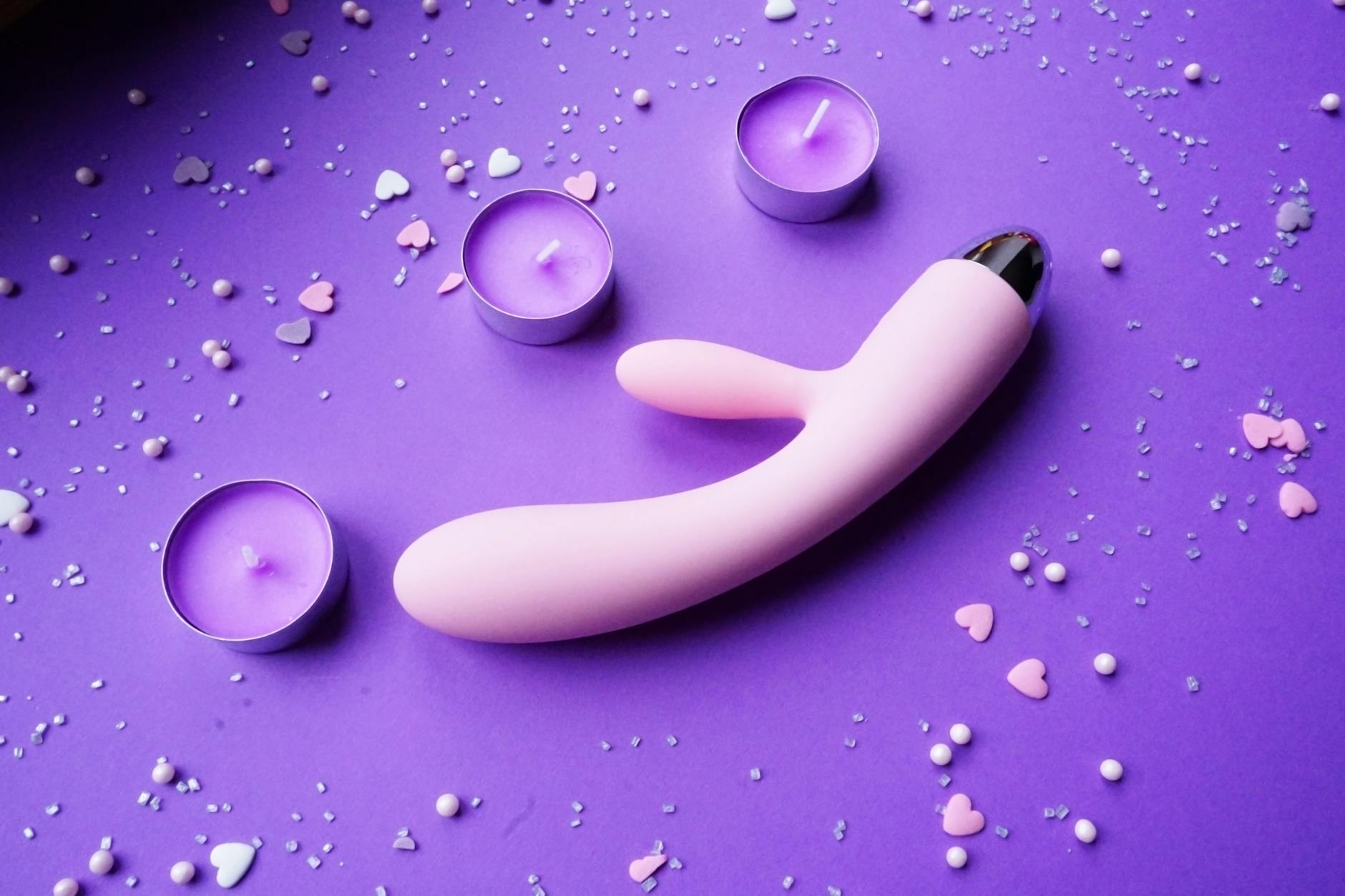
When sex becomes complicated again
Breakup or divorce leaves scars. Even when you're ready to be with someone new (or reconnect with an existing partner), your body sometimes doesn't get the memo. Touch feels unfamiliar. Pleasure feels risky. Desire shows up late, or not at all. You're not broken. You're healing.
This is where a lemon vibrator, or any clitoral vibrator, becomes more than a toy. It becomes a bridge. It gives you control when control feels necessary. It lets you experience pleasure on your own terms before you're ready to share it. And when you are ready to include a partner, it becomes a conversation tool that says "I'm interested in this" without requiring you to find the words.
What happens to desire after relationship loss
The science is straightforward. Breakup or divorce activates your nervous system's threat detection mode. Cortisol rises. Oxytocin (the bonding neurochemical) drops. Your brain associates vulnerability with pain, so it downregulates sexual response as a protective mechanism. Your body is doing its job. That doesn't make it any less frustrating.
Add to this the practical reality: you're learning a new partner's body, or re-learning an old one from scratch. You're rebuilding trust. You might carry shame, guilt, or fear about what went wrong. You're comparing this to what you had before (usually unfavorably in the early days). Your mind is doing a thousand things except being present for pleasure.
This is also temporary. But "temporary" can feel like forever when you're in it.
Why lemon vibrators work for post-breakup intimacy
Three reasons that matter:
They work without emotional reciprocity. Your partner doesn't have to perform. You don't have to worry about their pleasure or judgment. A lemon vibrator delivers consistent sensation regardless of what's happening in your head or your relationship. That's not romantic. It's exactly what you need right now.
They lower the barrier to reconnection. If penetrative sex feels too vulnerable or fraught with history, a lemon clitoral vibrator lets you start somewhere else. You get pleasure. You get agency. You build positive associations with touch in this new context. That's how nervous systems reset.
They give you language. If you've never used a vibrator with a partner before, introducing one post-breakup says something clear: "I'm interested in my pleasure, and I'd like you to be part of that." It's not a criticism of them. It's not replacing them. It's including them in something new.
The practical first conversation
Let's say you're dating someone new (or trying to reconnect with an existing partner). At some point, pleasure has to be addressed. Here's how to bring it up without turning it into a whole thing.
Pick a low-stakes moment. Not in bed, not mid-intimacy. Somewhere you're both clothed and can actually think. Say something like: "I've been thinking about ways to make sex feel more fun for both of us. I picked up a lemon vibrator. I'd like to try it together if you're open to it."
That's it. You've named the tool, expressed interest in shared pleasure, and made space for a no. Most people will say yes, or "tell me more." Some will need time to think about it. That's all data. You're learning whether this person is curious, generous, and willing to try things with you. You're also learning something about yourself.
If they push back, don't defend. You don't need their permission to explore your own pleasure, but you do need their cooperation for partnered sex. If the conversation stalls, you might offer: "It's not about you. It's about me feeling safer exploring what I like." Often that lands differently.
Your first time using a lemon clitoral vibrator together
Go slow. Not "foreplay slow." Slower than that.
Start clothed. Let your partner hold the lemon vibrator while you guide their hand. This removes the myth that you're trying to replace them. You're literally guiding them. They're learning what you respond to. They're getting feedback in real time (yes, higher intensity / no, lighter / yes, that spot). This is education disguised as sex.
Take your time with patterns. The Lem, like most lemon sucker vibrators, has multiple intensity levels. Start at level one or two. You might think that's not enough. Your nervous system, which is still in recovery mode, will probably disagree. Let it build. Arousal takes longer when you're healing. Budget 20-30 minutes, not 10.
Talk if you want to, or don't. Some people need silence to stay present. Some need confirmation that their partner is enjoying themselves too. If you do talk, keep it simple: "That feels good" or "Lighter please" or "I like when you...". You're narrating your own pleasure, not performing a fantasy.
Stop if anything feels off. Flashbacks, intrusive thoughts, or sudden discomfort aren't failures. They're signals that your nervous system needs more time. This is information. Honor it.
When anxiety is part of the picture
Post-breakup sex often arrives wrapped in anxiety. You might worry that you're not attractive anymore. That this new partner will leave. That you're doing it "wrong." That pleasure itself is risky. This is normal. It's also exhausting.
A lemon vibrator helps because it removes some of the performance pressure. If you're focusing on sensation, you're not running a commentary on your body or your partner's reactions. You're present with physical experience instead of lost in your head.
If anxiety is severe (persistent intrusive thoughts, panic during sex, avoidance), that's a conversation for a therapist, not a vibrator. But many people find that a combination of therapy and thoughtful, gradual reconnection with pleasure helps them move through it. The vibrator is one tool in a larger toolkit.
Rebuilding vulnerability on your timeline
Here's what I see repeatedly in my practice. People who've been through breakup or divorce want to "get over it" quickly. They feel like they should be ready to be fully open and trusting again. They're not, and that's okay.
Using a lemon clitoral vibrator with a partner isn't skipping the vulnerability work. It's doing it at a pace your body can handle. You're saying yes to pleasure. You're letting someone else witness your pleasure. You're building positive touch memories in a new context. That's the work.
Trust rebuilds slowly. Desire rebuilds even slower. A lemon vibrator doesn't skip either process. It just makes the early steps feel less fraught.
Creating actual intimacy, not just sensation
Intimacy and sex are not the same thing. You can have great sex that's hollow. You can have mediocre sex that feels deeply intimate. The difference is usually presence and attention.
When you're using a lemon vibrator together, you have permission to focus entirely on sensation. That's already more intimate than much of what happens in post-breakup recovery sex, which is often framed around "proving" something or getting back to normal.
If you want to deepen it further, add eye contact. Notice what your partner does when you're responding to pleasure. Let them see you. Ask them what they notice. Not as performance review, but as genuine curiosity about what they're witnessing. This is where sex becomes intimate.
When you're ready for more complexity
After a few sessions, you might want to use the lemon vibrator differently. Some people prefer solo use first, then introduction with a partner. Some want to combine it with penetration. Some find that they don't need it anymore once their nervous system settles.
All of these are fine. The point isn't to make the vibrator a permanent fixture. The point is to use it as a bridge while you're rebuilding. Once you feel safe again, once your body trusts again, you might not need it. Or you might discover you love it and keep it as part of your rotation. That's the goal: choice, not dependency.
The conversation you might need with yourself
If introducing a lemon vibrator or any sex toy makes you feel like you're failing at "normal" sex, I want to name that directly. You're not. You're healing. You're being creative and smart about your own pleasure. You're including a partner in something vulnerable. That's the opposite of failure.
Breakup and divorce carry shame, even when they're the right choice. Adding shame to your sex life doesn't help anyone. Using a tool that helps you reconnect with pleasure and trust? That's actually brave.
FAQ: Common questions about lemon vibrators after relationship loss
Will my partner think I'm replacing them if I bring a lemon vibrator into our sex life?
Most people don't interpret it that way, especially if you frame it as curiosity about shared pleasure rather than a substitution. If your partner does interpret it negatively, that's worth exploring. Are they insecure? Are they uncomfortable with you prioritizing your own pleasure? These are real questions that matter beyond the vibrator itself.
How long should I wait after a breakup before introducing a vibrator to a new partner?
There's no timeline. Some people are ready in weeks. Some take months or years. The question isn't "how long," it's "do I feel safe enough to be vulnerable with this person?" If yes, the timing is right. If no, more time won't fix it. Only genuine trust-building will.
Can using a lemon vibrator help me feel less numb after divorce?
Yes, often. Numbness is a protective response. Gentle, self-directed pleasure can help your nervous system remember that sensation isn't always dangerous. But if numbness is persistent across your whole life, that's a sign to work with a therapist, not just reach for a vibrator.
Is it okay to use a lemon clitoral vibrator if I'm not sure I want to be with my partner long-term?
Absolutely. You're allowed to explore pleasure with someone without committing to forever. You're allowed to say "let's try this" without it meaning "let's stay together." Pleasure and commitment are separate conversations, though people often tangle them together.
What if my partner wants to use the lemon vibrator on me but I'm not comfortable with that yet?
That's important information. You can ask for more time. You can say "I want to use it solo first" or "I want you to guide my hand, not operate it yourself." Consent includes the pace of intimacy. Anyone who gets frustrated with that is showing you something important about whether they respect your boundaries.
How do I know if I'm ready for sex again after a major relationship ended?
You're ready when the thought of intimacy doesn't trigger panic. When you can imagine pleasure without immediately thinking about your ex. When you're curious more than terrified. When you want it for yourself, not to "fix" the relationship or prove something. A lemon vibrator can help you get to that place, but it's not a substitute for doing the emotional work first.
The real work
Introducing a lemon vibrator or any pleasure tool after breakup or divorce is part of the healing process, not a shortcut around it. You're rebuilding trust in your body. You're relearning desire in a new context. You're deciding what pleasure means to you now.
Your partner (new or rekindled) is part of that story. But you're the main character. Make sure that's clear in how you approach it. Your pleasure matters. Your comfort matters. Your timeline matters. Everything else follows from that.
If you want to talk through the relationship side of this, or if sex is one piece of a larger reconnection challenge, reach out. That's what I'm here for.