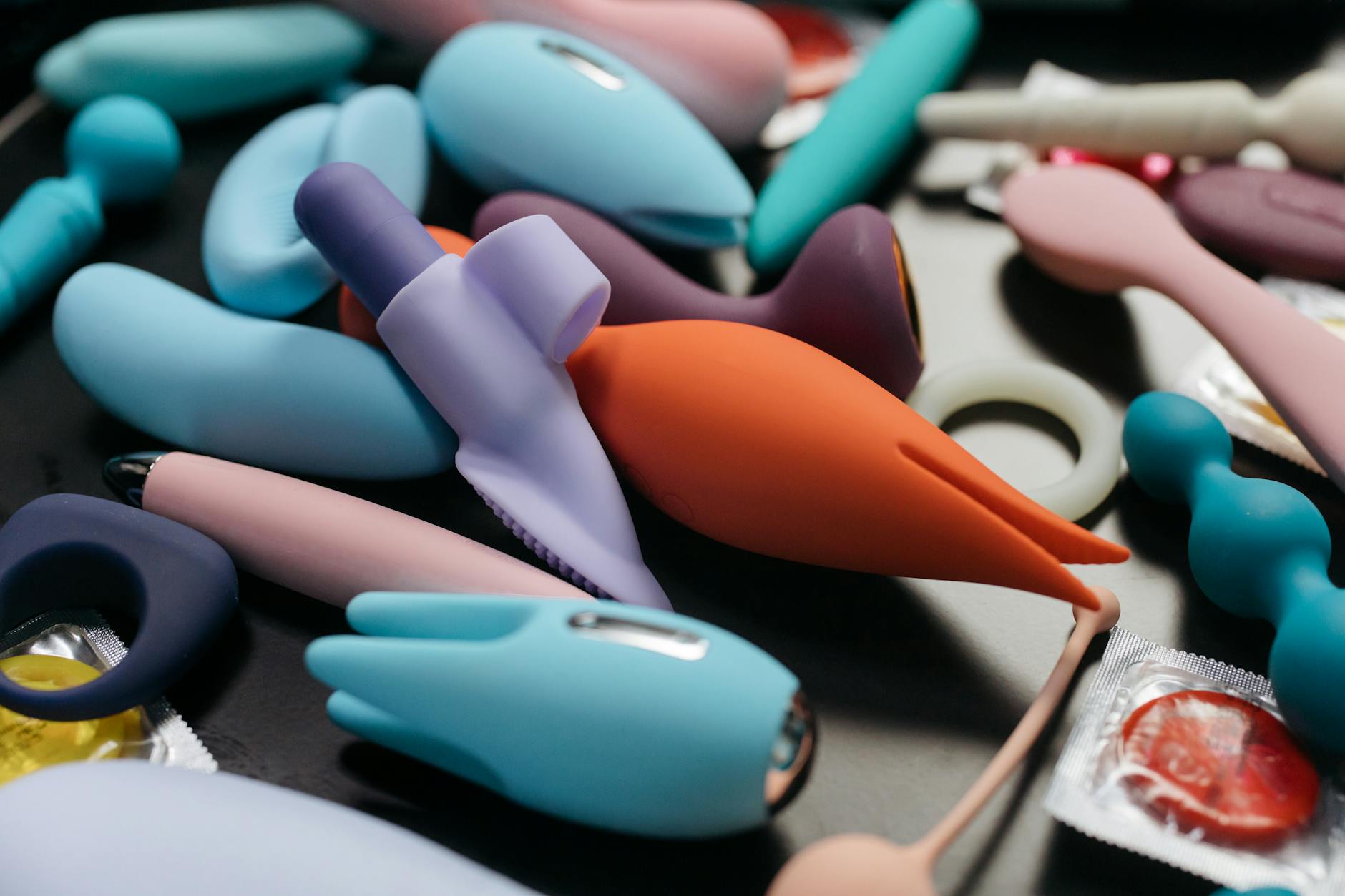
Let's talk about what nobody mentions at the clinic
You started hormonal birth control and something shifted. Maybe orgasms take longer. Maybe they feel duller. Maybe arousal itself is quieter. And then you spend six months wondering if you're broken or if this is just your life now. Spoiler: neither. Your body is responding exactly how it should to the hormones you're introducing, which means there's a very specific reason this is happening and, more importantly, a way to work with it instead of against it.
Hormonal birth control changes sensation. It doesn't eliminate it. But the gap between what you felt before and what you're feeling now can feel massive, and most people aren't warned that this is coming. I'm going to walk you through what's actually happening at the neurochemical level, why lemon vibrators and other clitoral vibrators work so well to bridge that gap, and what adjustments you can make to feel like yourself again.
How birth control rewires your arousal
Hormonal contraceptives (the pill, the patch, the ring, the shot) work by flooding your system with synthetic versions of progesterone and sometimes estrogen. Your brain reads this as "already pregnant, no need to cycle," and your natural hormone production flatlines. This is intentional. It's also why your sensation changes.
Here's the chain reaction. Testosterone, which exists in bodies with vulvas and is a major player in sexual desire and clitoral sensitivity, drops significantly on hormonal birth control. Studies show a 20 to 40 percent reduction in circulating testosterone in the first few months. That's not trivial.
At the same time, estrogen and progesterone levels are held artificially steady instead of fluctuating across your cycle. Your brain chemistry, particularly in regions that process pleasure and arousal, adapts to this new baseline. The neural pathways that fire during sexual response become slower to activate. It's like your body has retuned itself to a different frequency.
Orgasms don't disappear. Your clitoral nerve endings don't go anywhere. But the speed and intensity of the response does change. For many people, this feels like someone turned down the volume on everything sexual.
Why sensation specifically gets muted
Three hormones drive sexual response: testosterone (desire and sensitivity), estrogen (lubrication and clitoral blood flow), and dopamine (the reward signal that makes pleasure feel pleasurable). Hormonal birth control stabilizes the first two but also flattens the natural peaks and valleys that would normally trigger dopamine spikes.
Think of it this way. Before birth control, your testosterone spiked midcycle. Your brain flooded with dopamine in response to sexual stimulation because it was biochemically primed to do so. Now your testosterone is steady at a lower baseline, and your dopamine response is muted because there's no hormonal peak to amplify it.
Clitoral blood flow also decreases on hormonal birth control. Your clitoris literally becomes less engorged during arousal. Less engorgement means less sensitivity, less intensity, and for many people, difficulty reaching orgasm at all.
The good news: this is fixable. You don't need to switch birth control methods or abandon your contraceptive choice. You need better tools.
Why lemon vibrators work better than your hands
Lemon vibrators, and clitoral vibrators in general, bypass the sensation deficit by delivering consistent, high-frequency stimulation that your body can actually feel. Here's the mechanism.
Your clitoris has about 8,000 nerve endings concentrated in a space the size of a pea. When sensation is muted, gentle touch doesn't register as clearly. But rhythmic vibration at frequencies between 80 and 100 Hz (which is where most lemon clitoral vibrator models operate) actually triggers the sensory receptors in your clitoris in a way that manual stimulation often can't, especially when your baseline sensitivity is lower.
It's not about being "more intense" in a crude way. It's about matching the frequency that your nervous system is actually wired to respond to. A lemon vibrator delivers consistent, repeated stimulation in a rhythm your body can lock onto. Your hands, no matter how skilled, can't maintain that consistency or frequency without tiring.
Additionally, the suction-based design of many lemon vibrators creates gentle negative pressure that mimics the sensation of oral sex without the variability. For people on hormonal birth control with reduced clitoral blood flow, this gentle suction can actually increase engorgement more effectively than direct vibration alone. You're not just stimulating the nerve endings. You're also improving the blood flow to the tissue.
Practical adjustments while you're on hormonal birth control
If you're using a lemon clitoral vibrator or similar device, here are the adjustments that actually work.
Start with longer warm-up time. Your arousal now takes longer to build. Budget 20 to 25 minutes of foreplay or solo exploration before introducing the vibrator. This gives your clitoris time to naturally engorge and prepares your nervous system for stimulation. Rushing defeats the point.
Use plenty of lubrication. Some forms of hormonal birth control, particularly those high in progestin, reduce natural lubrication. A water-based lube isn't optional. It reduces friction and allows the vibrator to move smoothly against tissue that's already less responsive than before.
Start on lower settings. If your lemon vibrator has multiple intensity levels, begin on setting one or two. Your clitoral nerves are not numb, but they are less responsive to stimulation. Starting low and building up helps your nervous system gradually engage without overwhelming or desensitizing the tissue further.
Build stamina gradually. Some people find they need 15 to 20 minutes of continuous stimulation on hormonal birth control, where previously 5 minutes was enough. This isn't abnormal. Your body is working with lower testosterone and a slower arousal response. Give it the time it needs.
Timing matters more than you think
Hormonal birth control delivers a steady hormone dose, but even that steady dose has micro-fluctuations, particularly with pills taken at different times or patches that sit longer. Some people report that sensation varies slightly across the month, even on hormonal contraception. If you're tracking this, you might notice that pleasure feels slightly easier around the same time each cycle.
More importantly, other factors now become the real variables. Sleep deprivation tanks desire and sensation. Stress reduces clitoral blood flow. Dehydration thickens blood and reduces engorgement. These contextual factors matter way more now that your hormones aren't naturally cycling to compensate.
Make sure you're sleeping enough, managing stress (which is always easier said than done), and staying hydrated. None of these are substitutes for a good lemon vibrator. But they make the vibrator work better.
The conversation with your partner (if you have one)
If you're in a relationship and your sensation has changed since starting hormonal birth control, your partner needs to understand that this isn't about them or about your attraction. It's a straightforward hormonal effect that was never explained to you at the clinic.
Introducing a lemon clitoral vibrator or similar device into partnered sex isn't a critique of their skills or a sign that something is wrong. It's a tool that works with your current neurochemistry. The best partners see it as an upgrade to shared pleasure, not a replacement.
When you do introduce it, frame it this way: "My body is responding differently since I started birth control, and this helps me feel what I need to feel. It's not about you. It's about this device being a better match for my nervous system right now."
When to talk to your doctor
If sensation loss on hormonal birth control is severe or if you're experiencing pain, pain during orgasm, or complete loss of desire beyond the first month or two, talk to your prescriber. Some people's bodies adjust to hormonal contraception within two to three months and sensation gradually returns to something closer to baseline. Others don't adjust well and might benefit from switching to a different formulation, dosage, or method entirely.
Non-hormonal IUDs (copper), barrier methods, or lower-dose hormonal formulations might feel better for your body. You don't have to stick with something that's making sex unpleasant. There are options.
When sensation actually gets better
There's a counterintuitive point worth making. For some people, hormonal birth control that stops the cramping, PMS, and unpredictable cycle actually opens up more space for pleasure, even with the sensation shift. Anxiety about pregnancy, pain during certain phases of the cycle, or the emotional weight of hormonal chaos can disappear. That mental shift can feel like a net gain in sexuality, even if the raw sensation is technically lower.
If that's your experience, that's completely valid. You don't have to "fix" anything. But if sensation loss is bothering you, knowing that a lemon vibrator can bridge that gap means you don't have to sacrifice your chosen contraceptive method.
FAQ: Lemon Vibrators and Hormonal Birth Control
Will using a lemon vibrator make my clitoris less sensitive over time?
No. Your clitoris won't become desensitized from using a vibrator, especially a clitoral vibrator at reasonable intensities. What you might experience is a brief period where direct touch feels less satisfying after vibration because the vibrator's frequency is so much higher than manual stimulation. Take a week off every month and you'll reset. The concern about desensitization is mostly myth.
Can I use a lemon vibrator if I'm on the pill and dealing with vaginal dryness?
Absolutely. In fact, many people find that lemon vibrators work better with lubrication. The suction-based stimulation combined with good lube can actually increase blood flow to the area and improve engorgement. Use a water-based lubricant and you're set.
Does sensation come back if I stop hormonal birth control?
For most people, yes. Testosterone and other hormones typically rebound within a few weeks to a few months after stopping hormonal contraception. Sensation usually follows. For some people it takes longer. Everyone's timeline is different, but the change isn't permanent.
What if I've been on hormonal birth control for years and sensation never came back?
Some people's bodies simply adapt to hormonal contraception and don't experience a full rebound even after stopping. This is rare but it happens. In those cases, working with a sex-positive therapist or healthcare provider can help identify whether other factors are at play (stress, relationship dynamics, other medications). A lemon vibrator remains a helpful tool regardless.
Can I use a lemon clitoral vibrator to help get to orgasm on birth control?
Yes, that's exactly what they're designed to do. If reaching orgasm on hormonal birth control feels like you're working twice as hard for half the payoff, a vibrator like the Lem is specifically engineered to deliver the kind of consistent, high-frequency stimulation that works with your reduced baseline sensitivity.
Should I tell my doctor I'm using a vibrator?
You don't have to, but if you're discussing changes to sensation or desire after starting birth control, mentioning that you're exploring tools to work with the change can be helpful context. Many modern healthcare providers are supportive of this. If yours isn't, that's worth noting about their practice.
Hormonal birth control is a gift for people who need reliable contraception. It's also a major neurochemical shift that almost nobody warns you about. The sensation changes you're experiencing are real, they're common, and they're not a sign that something is broken. You just need the right tool, and understanding how your body is actually responding makes all the difference.
The lem clitoral vibrator is designed exactly for this: to deliver stimulation that works with your current neurochemistry, not against it. Combined with patience, good lube, and a slightly longer warm-up, you can absolutely reclaim the sensation you thought you'd lost. If you have more questions about how to rebuild pleasure after hormonal shifts, reach out to us.
Sources and clinical references:
Davis, S. R., & Davison, S. L. (2012). Current perspective on testosterone therapy for women. Obstetrical & Gynecological Survey, 67(11), 733-746.
Amann, J. A., Emory, E. K., & Estes, R. E. (2005). Influence of oral contraceptives on genital anatomy and sexual response. Archives of Sexual Behavior, 34(4), 451-463.
Born, L., & Steiner, M. (1999). Advances in the treatment of premenstrual dysphoric disorder. Clinical Drug Investigation, 18(5), 343-354.